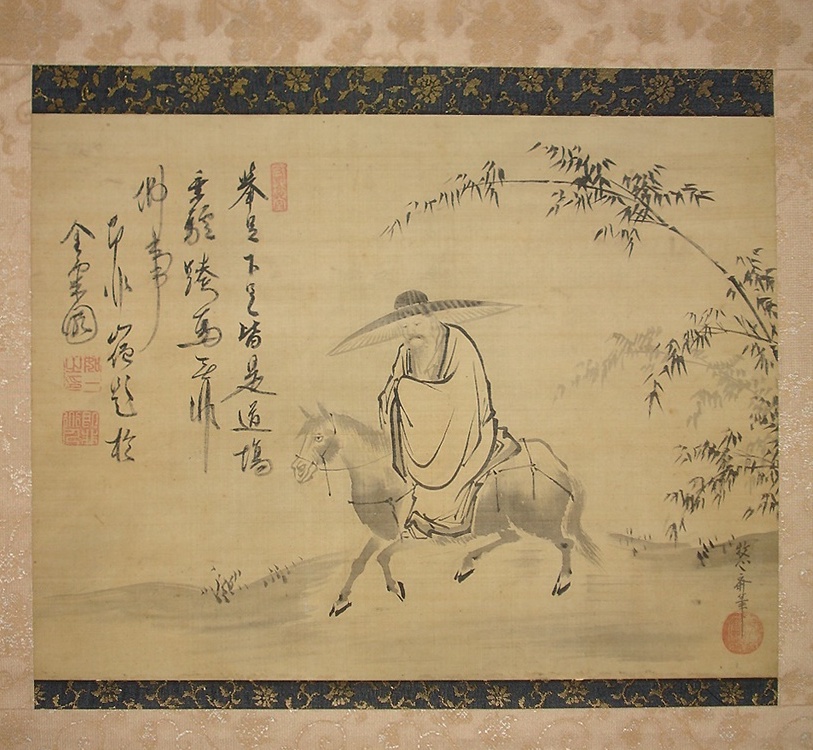
Kano Scroll by Yasunobu (1613-1685) and Sokuhi Nyoitsu (1616-1671)
Third son of the director of the Kano School of painting, Yasunobu was appointed head of the Kyoto branch at a young age after his father’s death. Meanwhile, hi
Third son of the director of the Kano School of painting, Yasunobu was appointed head of the Kyoto branch at a young age after his father’s death. Meanwhile, hi
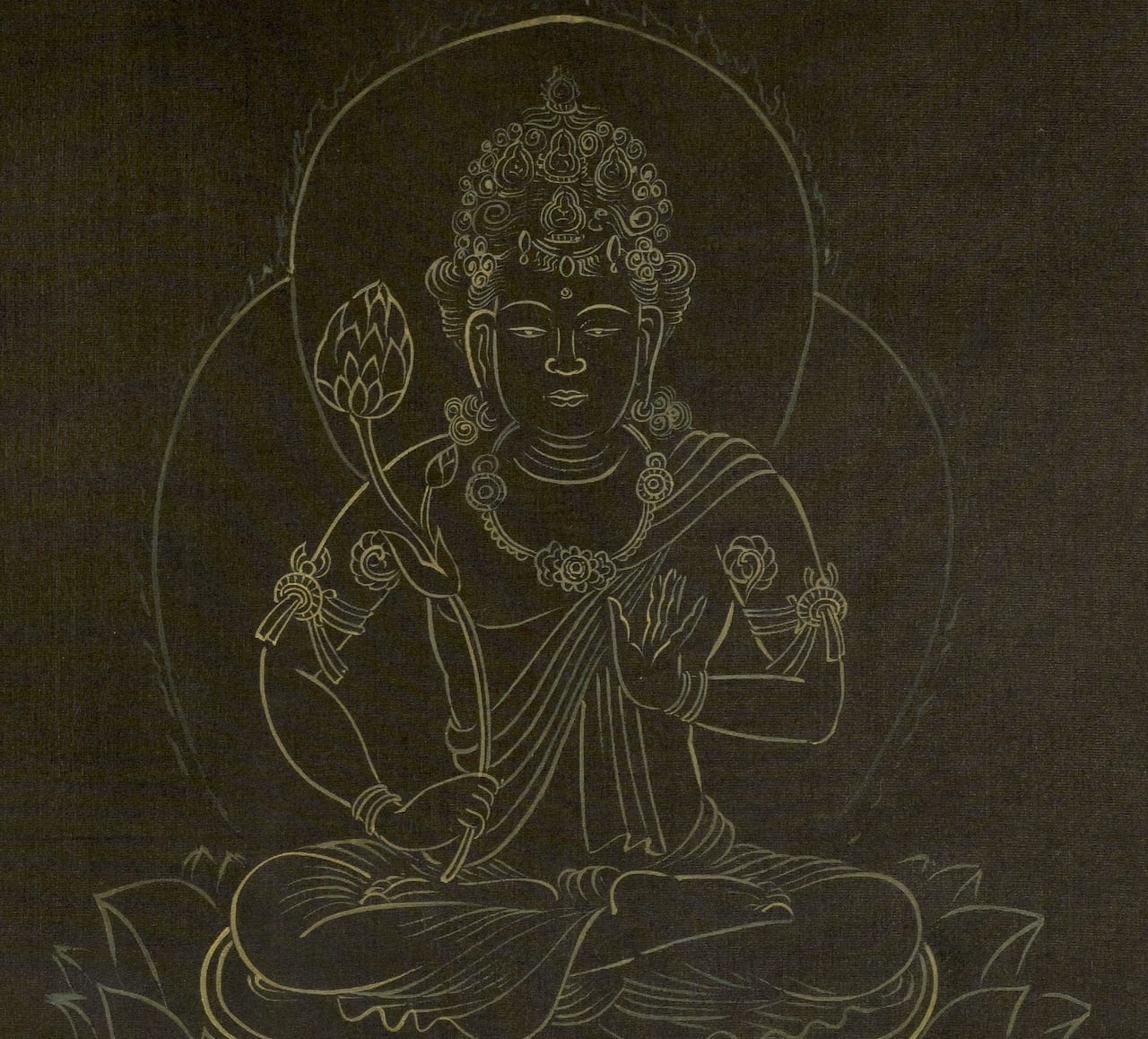
Seated in meditation with open and compassionate heart, this bodhisattva is on a spiritual journey, postponing his own salvation in order to remain on earth to
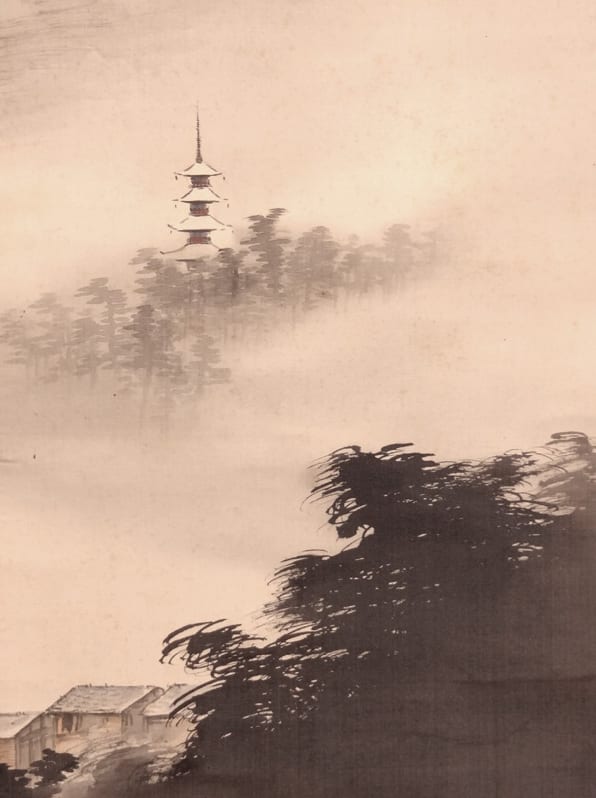
This masterful rendition of an idilic landscape done in the Nanga style of Chinese painting is spread across three canvases titled 1) “Arashiyama” (A district n
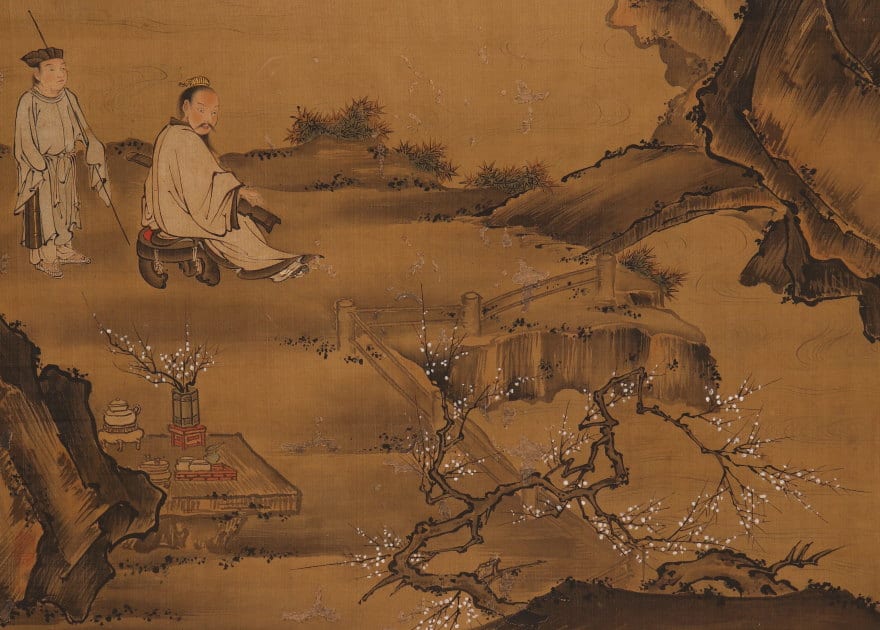
A masterpiece by one of the premier Literati painters from the Edo period. Born into a wealthy samurai family, At a young age, Bunchō was given a stipend that e
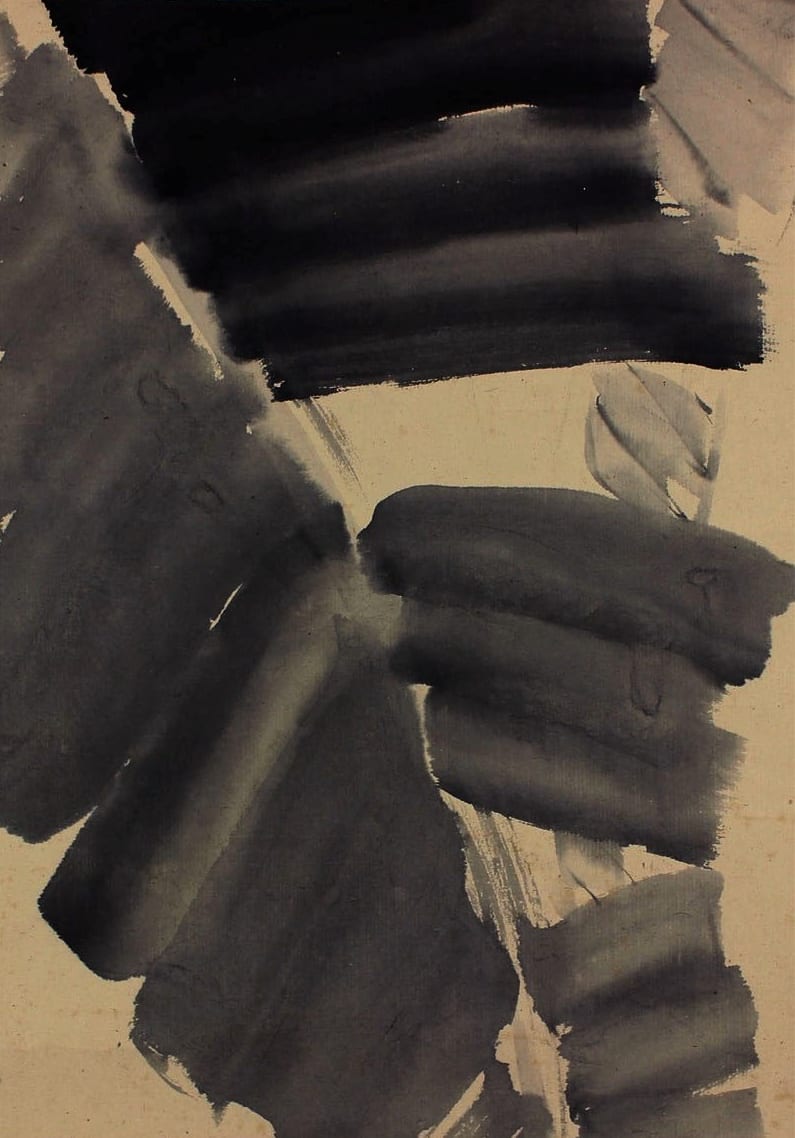
Japanese sumi on paper—this piece by well-known Meiji/ Taisho artist Tomita Keisen depicts a lone banana tree. Deceptively simple in style, each brush stroke ma
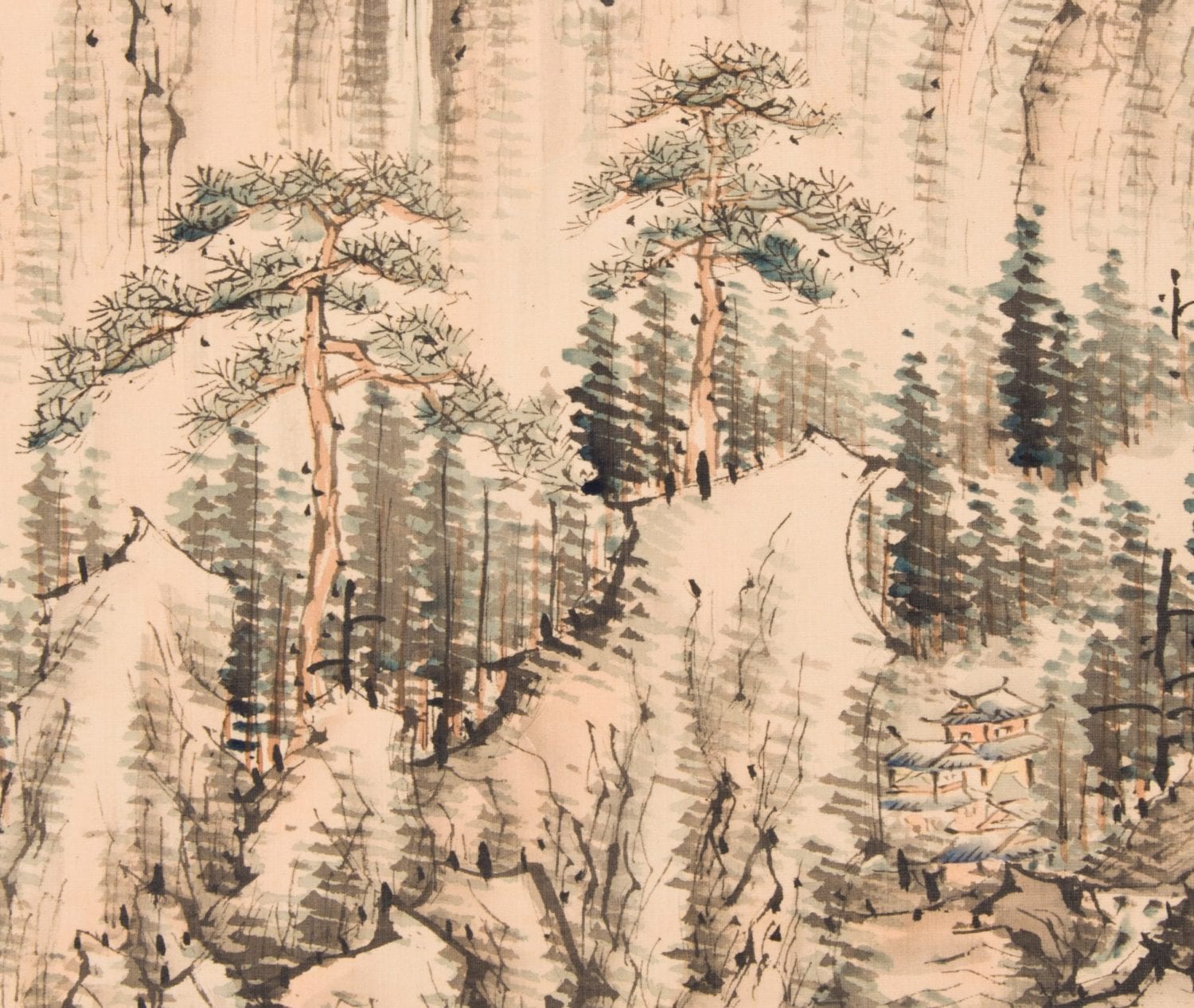
Japanese Nihonga painting on paper—this piece by well-known Edo painter, poet, and tea ceremony devotee Yamamoto Baiitsu depicts an idealized mountain scene in
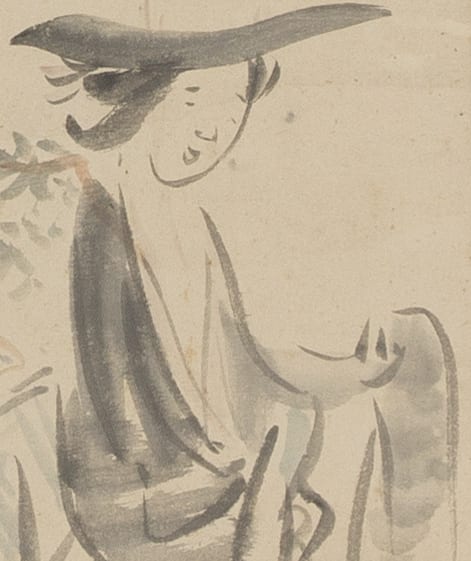
Rengetsu is widely regarded as one of the greatest waka poets of the 19th century. A skilled Shijo School painter, she was also an accomplished calligrapher and
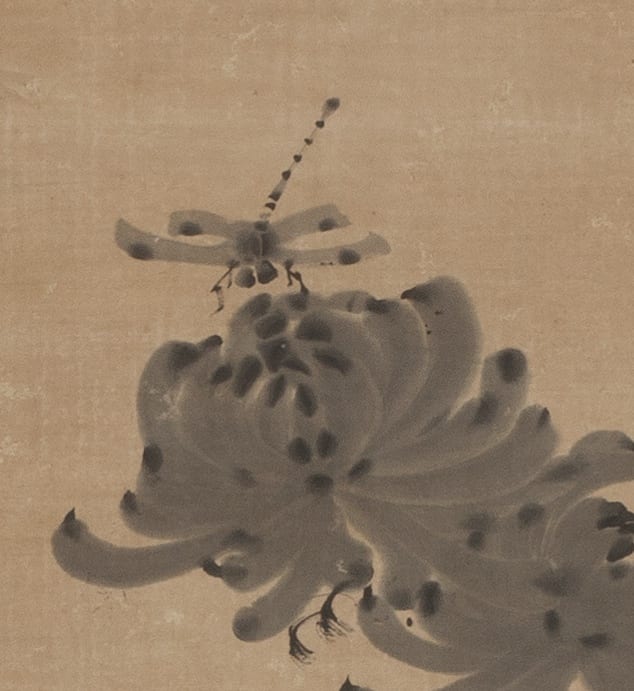
Sumi on silk. This delicate treatment of a dragonfly alighting on a chrysanthemum is the work of one of Japan’s most celebrated artists of the mid-Edo period. I
SOLD
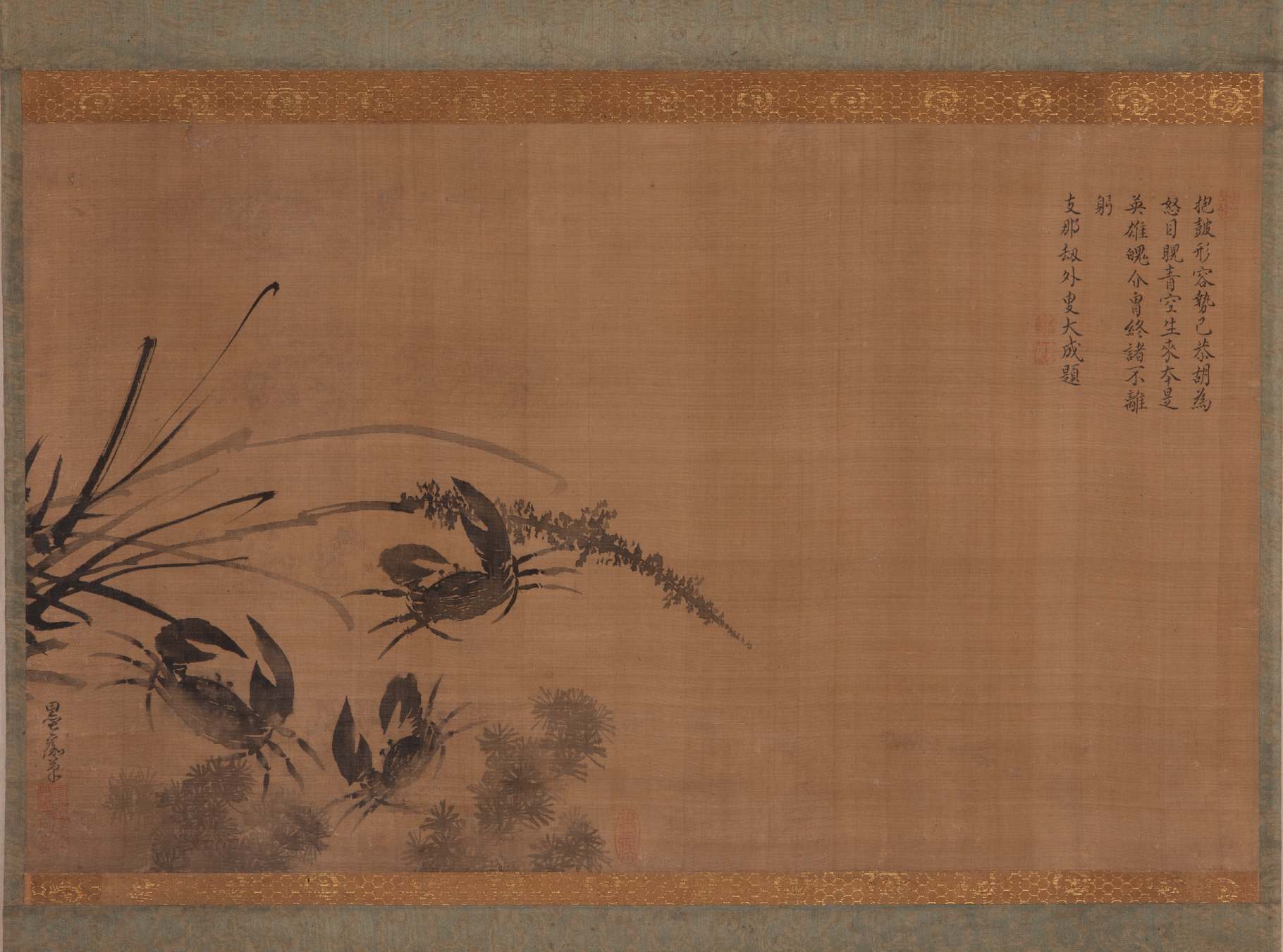
Sumi on silk. A fine example of painting from the Obaku sect of Zen which was brought to Japan in the 17th century from China. This naturalistic theme by Taijou
SOLD
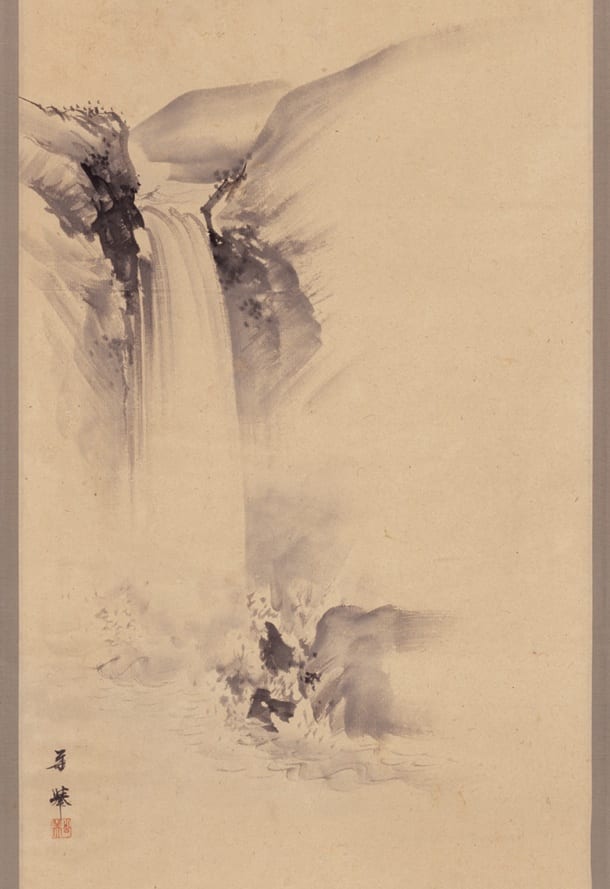
Sumi on paper. The artist Kakyo (1844-1928) was the son of the painter Chuuguuji. Kakyo studied both the Tosa and Kano styles and taught at the art school which
SOLD
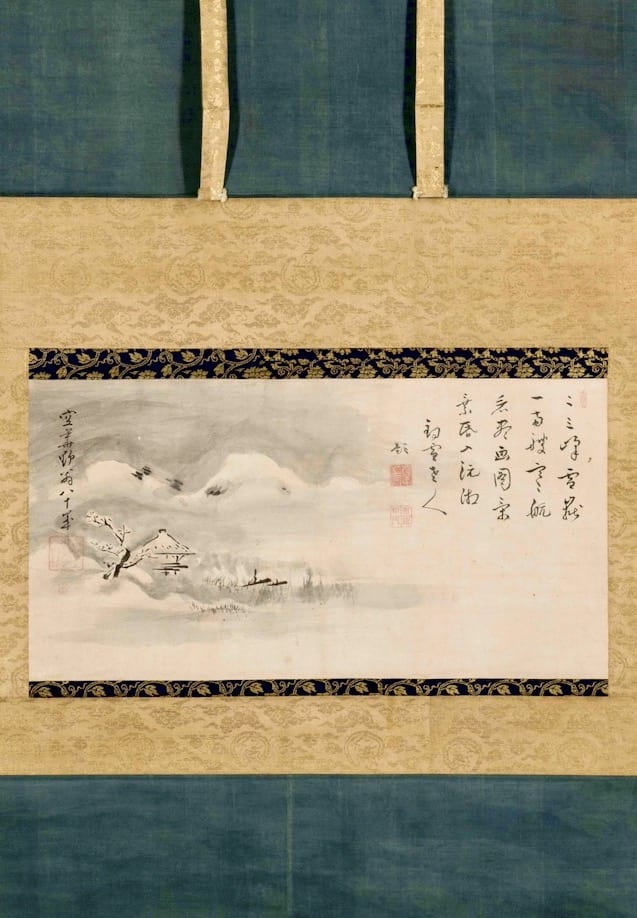
A small cottage perched on the edge of a tranquil lake, fishermen heading out in the morning chill to secure their daily catch. This tranquil scene from the Jap
SOLD
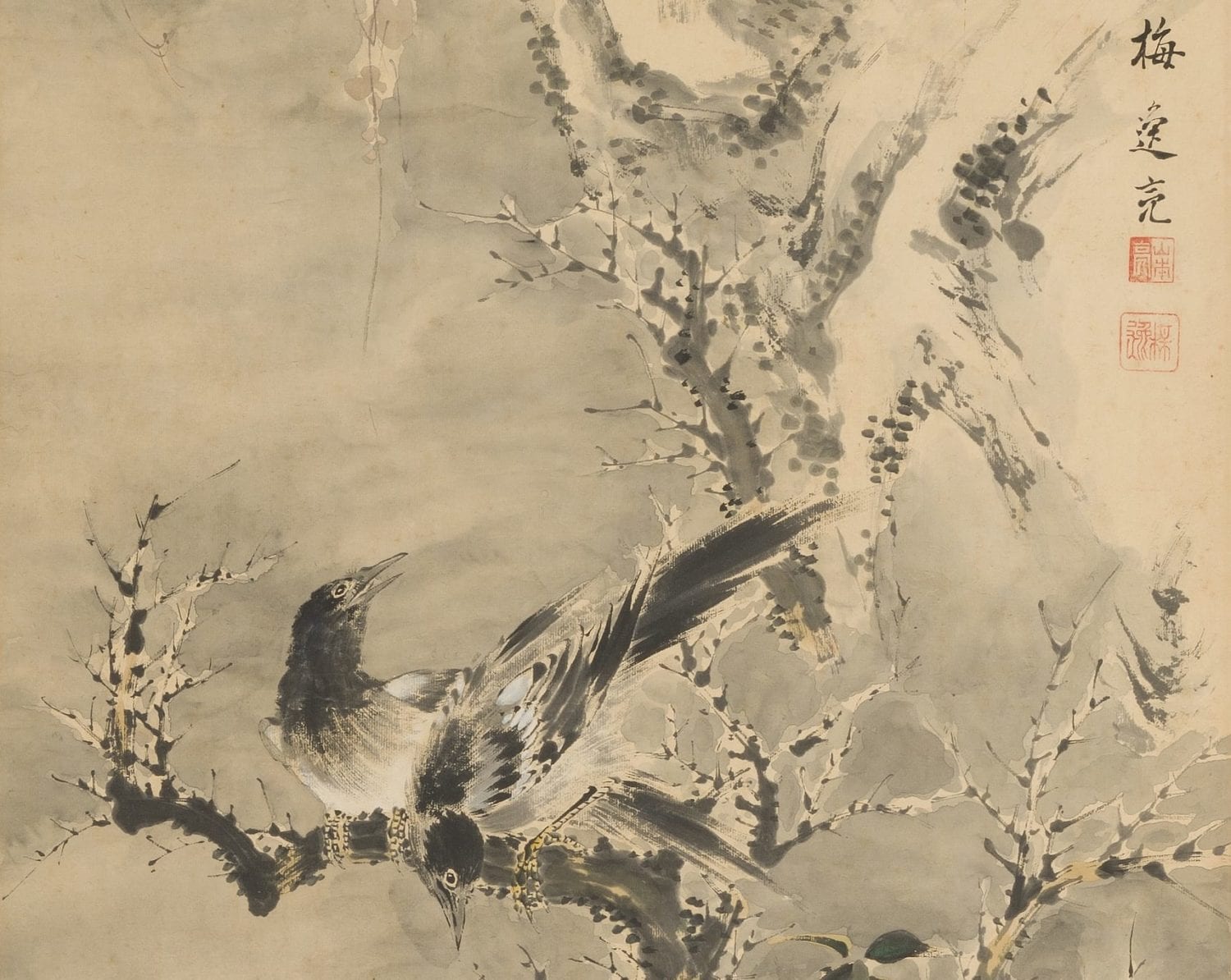
A native of Nagoya, a bustling Japanese center for shipping and trade in Late Edo, Baiitsu was heavily influenced by works of Chinese art, especially the natura
SOLD
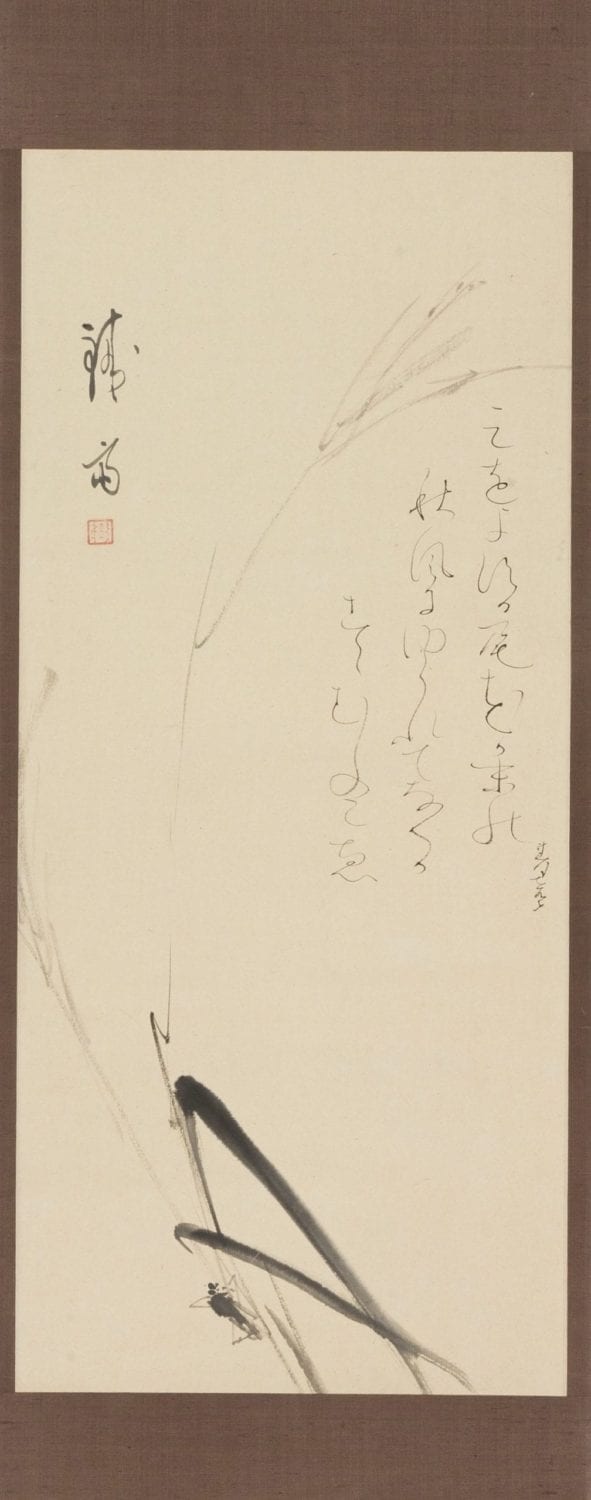
A collaboration piece between the famed poet/ nun of the late Edo period Rengetsu and her younger protege Tessai, this scroll depicts a frightened cricket makin
SOLD
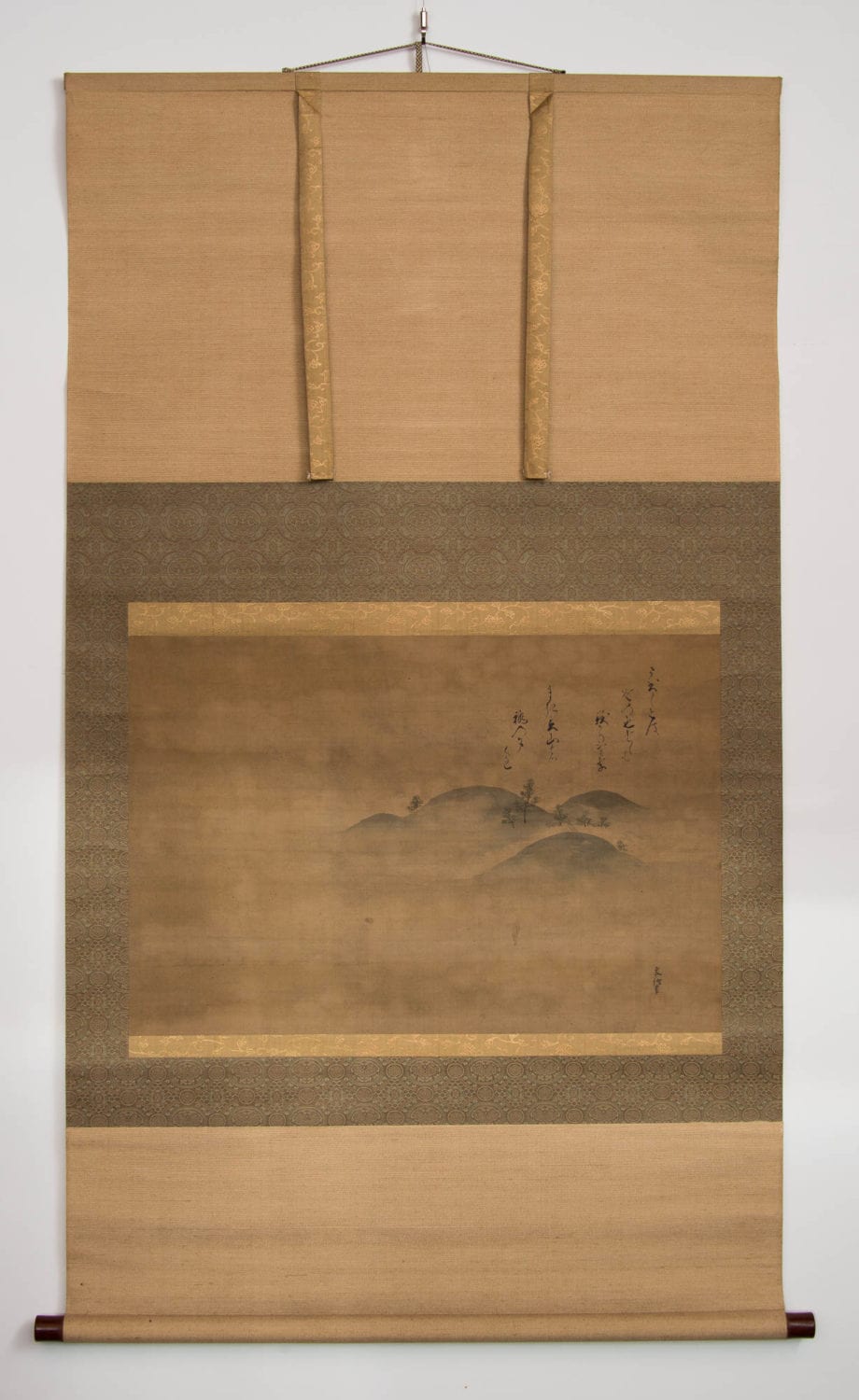
A fine example of Edo period Kano painting, this generously proportioned hanging scroll illustrates a late autumn scene from the Japanese countryside over 300 y
SOLD
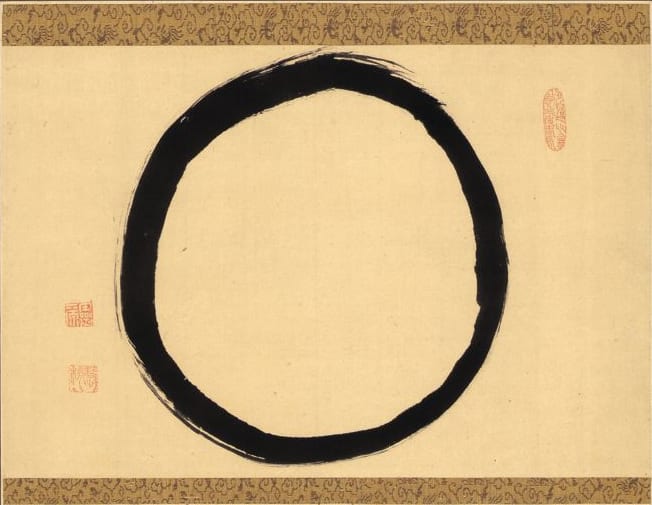
Sumi on paper. A fine ensō drawn by Reigen Eto, one of the most prominent disciples of Hakuin. It is said that Reigen was known for his delicate brush strokes a
SOLD
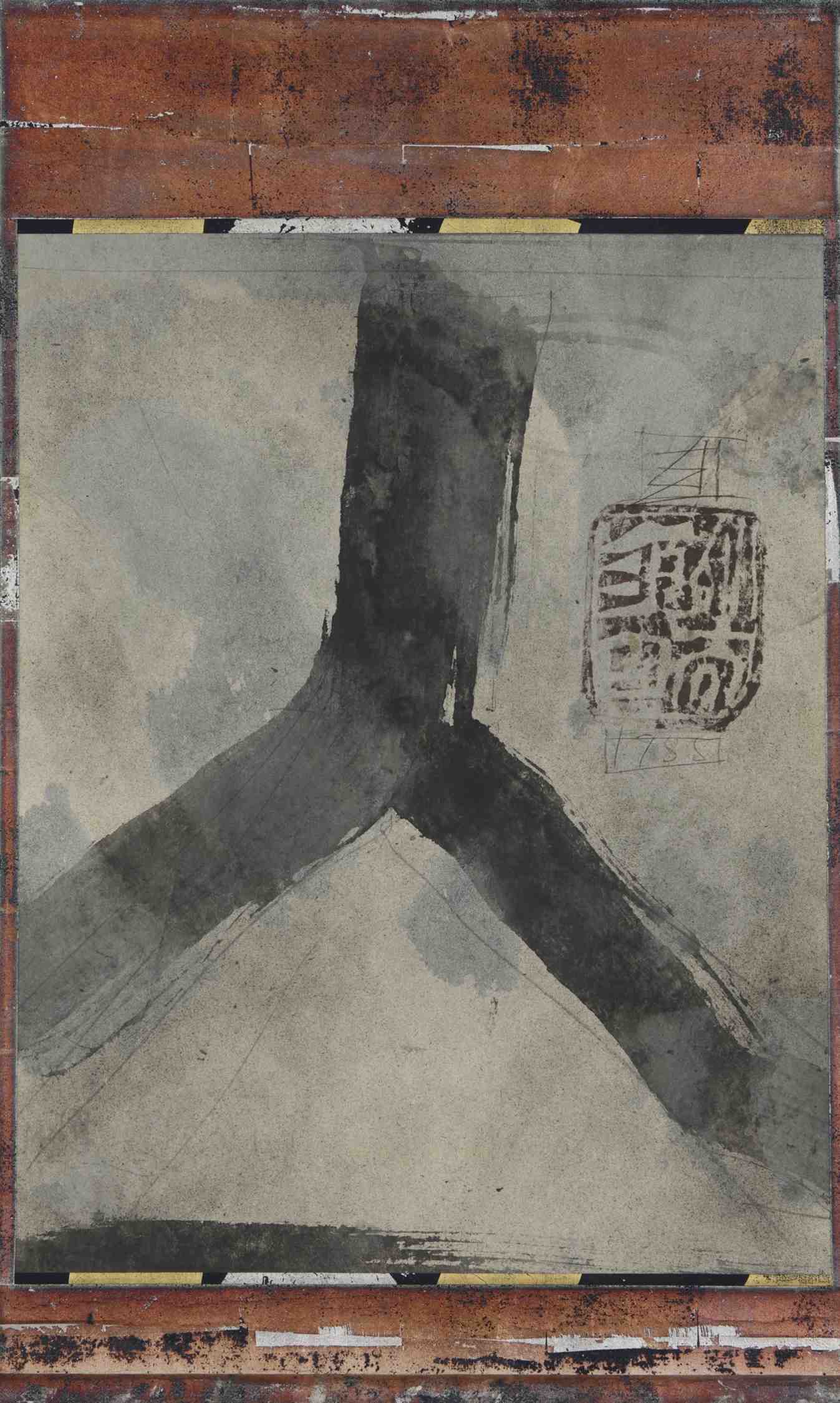
Sumi and color on paper. This piece depicts the single Chinese character hito (person or individual)in bold and distinctive calligraphic strokes. Signed and sea
SOLD
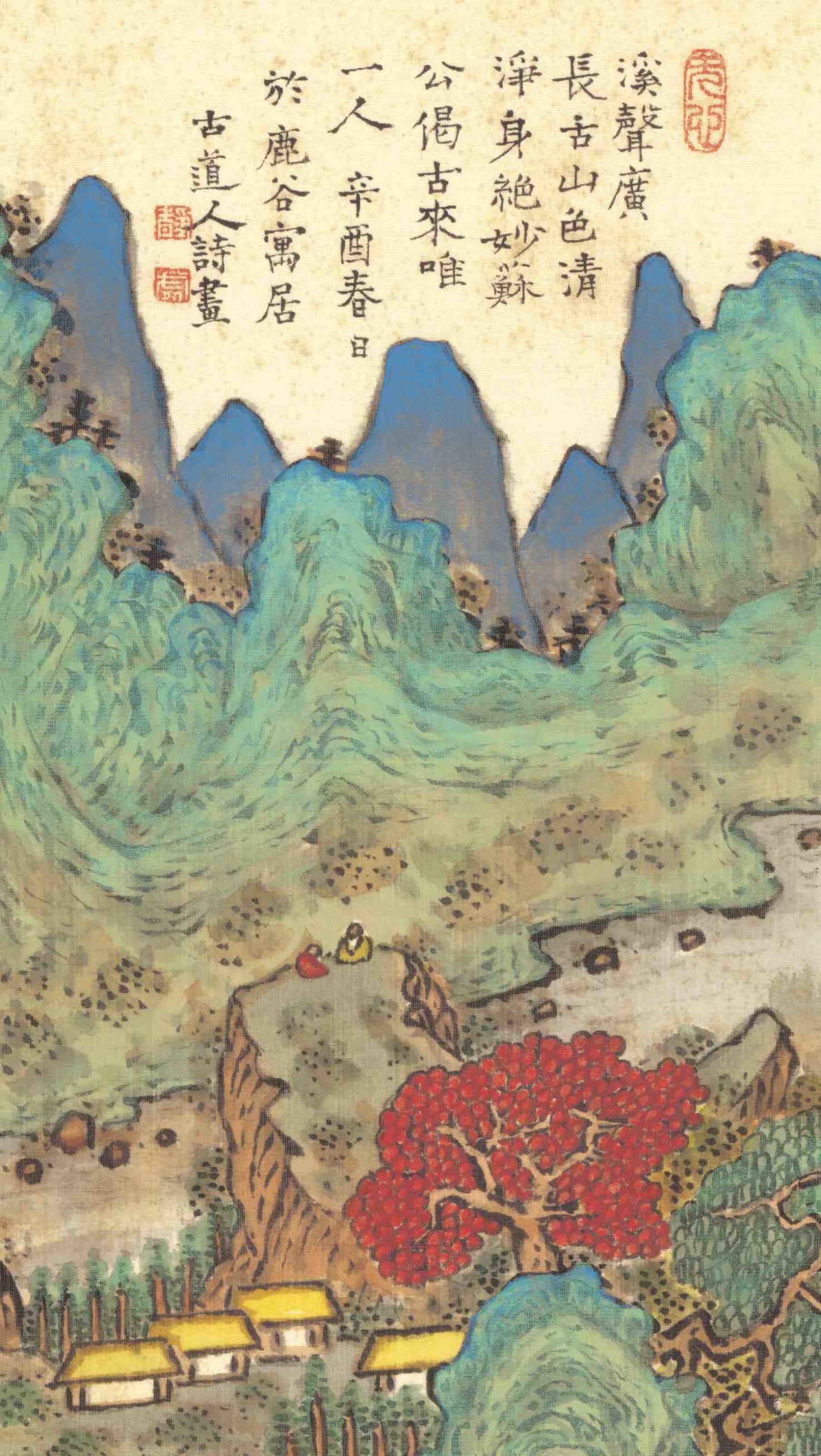
Sumi and color on paper. This hanging scroll by Fukuda Kodojin is a fine example of the Japanese nan-ga style of painting. Compared with other works by Kodojin,
SOLD
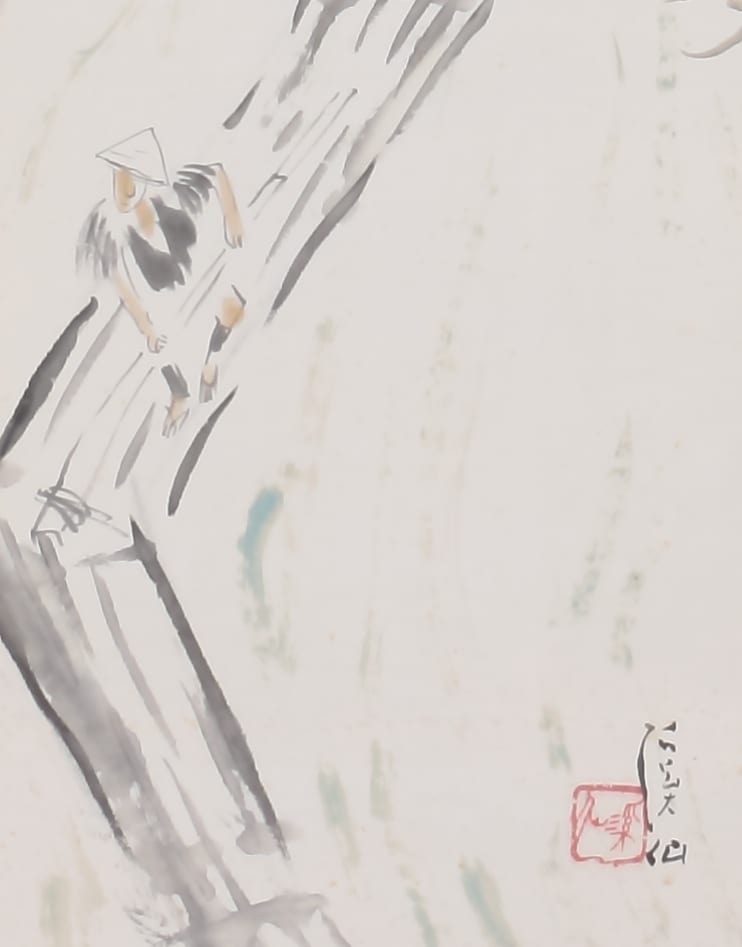
Sumi and color on paper. This piece by well-known Taisho period artist Tomita Keisen depicts foresters riding log rafts down the Uji-gawa. Keisen was trained in
SOLD
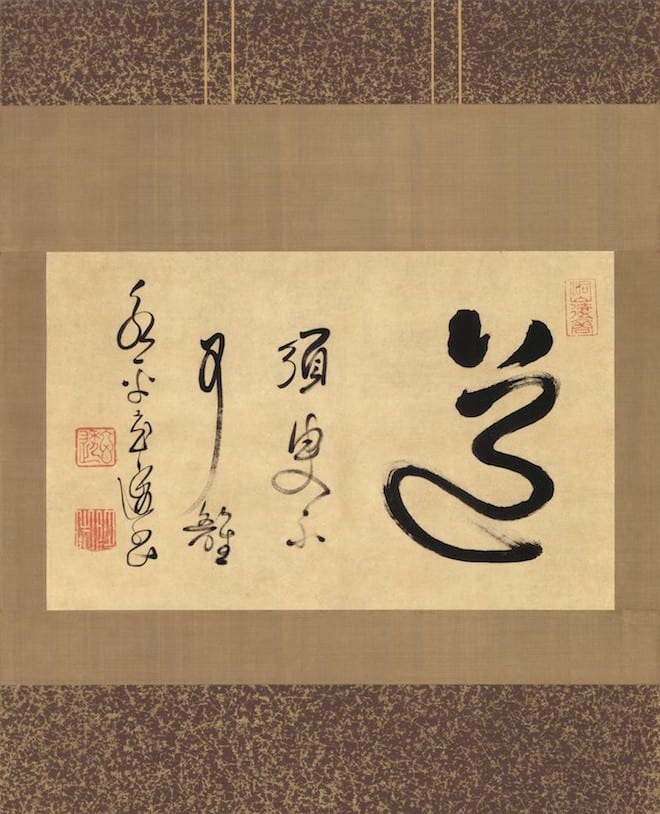
Sumi on paper. This impressive Zen painting by Gentō Sokuchū features the Chinese character michi (path) in masterfully rendered calligraphic strokes. As the 11
SOLD
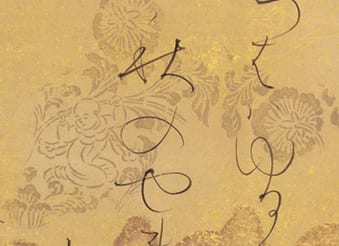
This piece by Ōtagaki Rengetsu contains a unique woodblock print technique that utilizes gofun, a ground oyster shell treatment. As a result, the forest sprites
SOLD