A Kamakura Period Bronze Buddha from a Devotional Votive Plaque
- Artist:
- —
- Era:
- Kamakura
- Price:
- SOLD
- Inquire:
- Contact gallery
- Similar artwork:
- Looking for something similar?
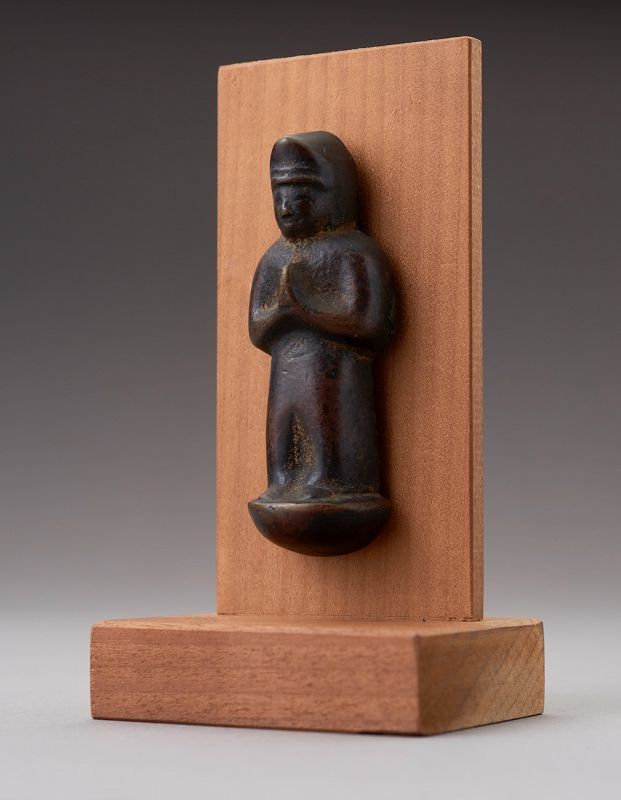
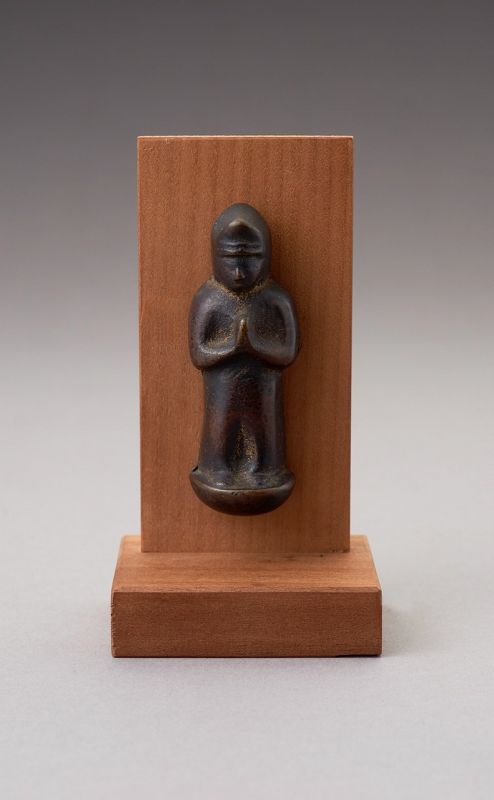
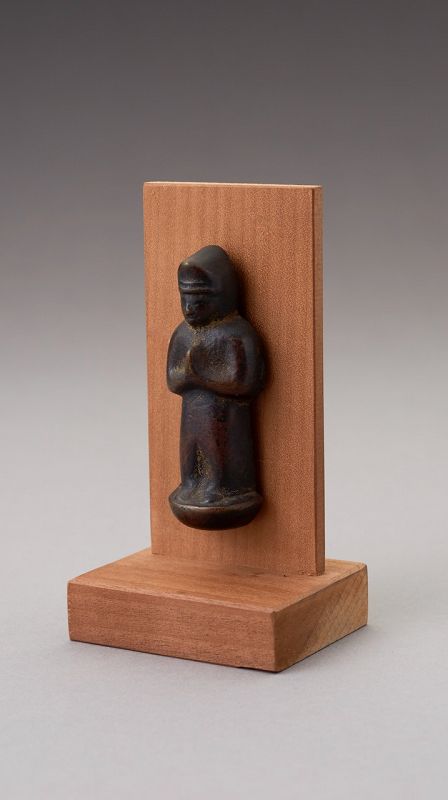
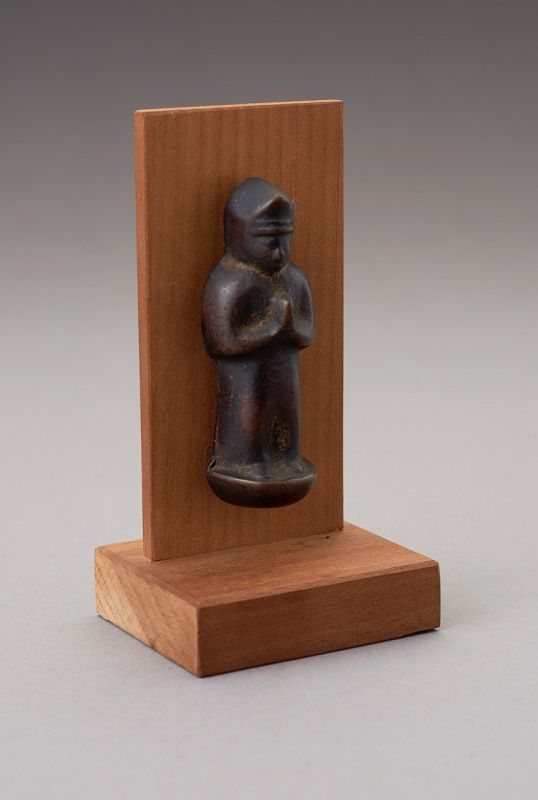
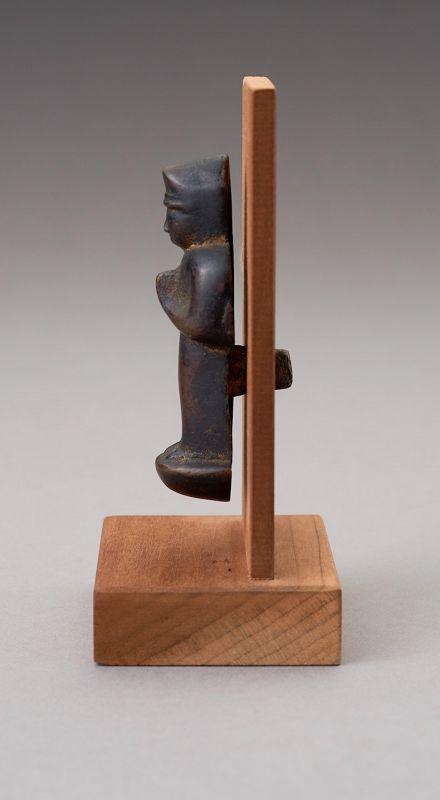
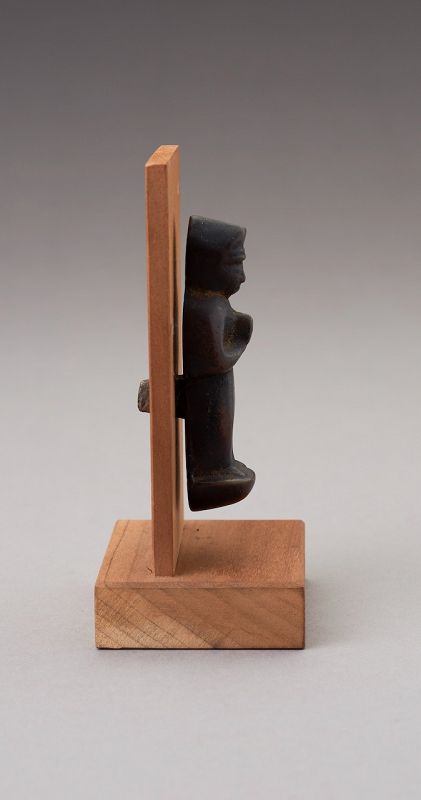
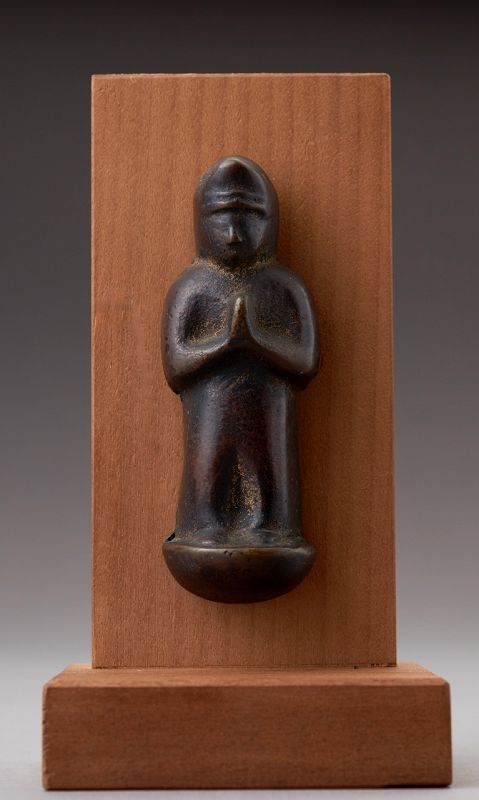
During the Kamakura period in Japan (1185-1333), a remarkable form of Buddhist sculpture known as the votive Buddha emerged. Commonly referred to as kakebotoke (hanging Buddhas), pieces like this would have been mounted on spherical plaques made of bronze or copper and hung in a Buddhist temple or possibly even in a Shinto shrine. These small-scale sculptures were created to serve as objects of devotion and were often commissioned by wealthy individuals or temples. The Kurakama period, which spanned from the late 12th century to the early 14th century, witnessed a surge in the production of these votive Buddhas. These sculptures typically depicted the Buddha in various mudras (hand gestures) and postures, conveying different aspects of enlightenment. The example featured here is rather unique in this regard. While most votive Buddha are shown seated, this one is depicted standing and engaged in deep contemplation through Anjali mudra pose.
The Kurakama votive Buddhas were renowned for their delicately carved features, serene expressions, and meticulous attention to detail. They provided a tangible focal point for devotees to express their reverence and seek spiritual solace. Today, these ancient devotional relics continue to captivate art enthusiasts with their timeless elegance and profound spiritual significance.
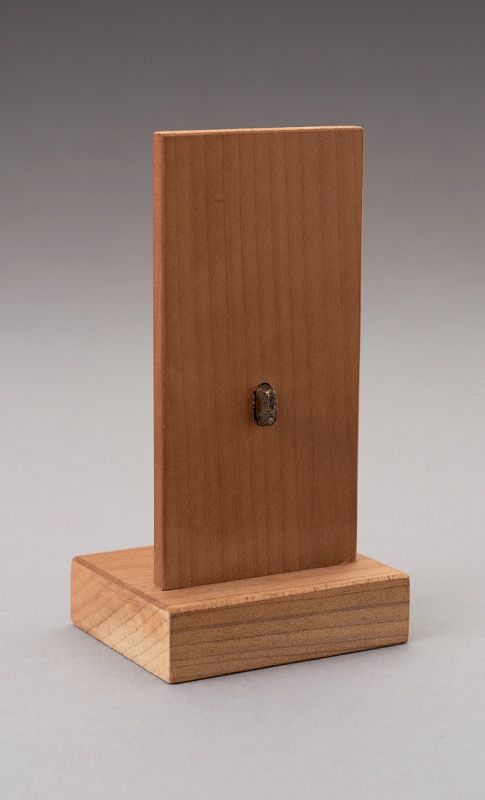
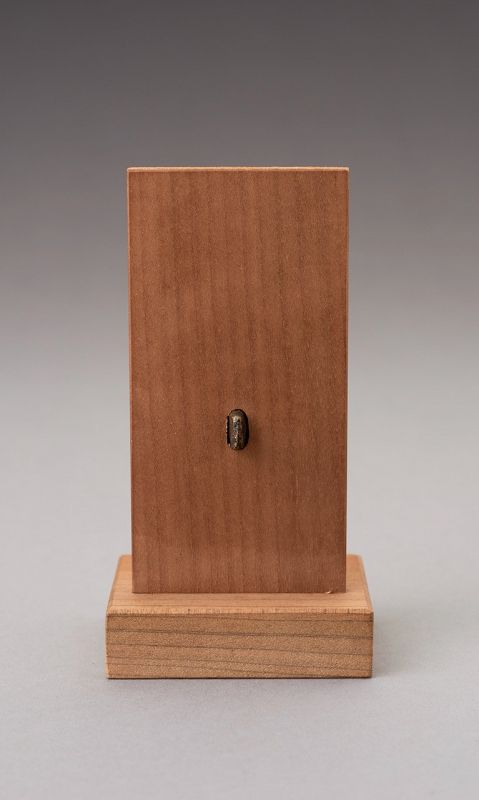
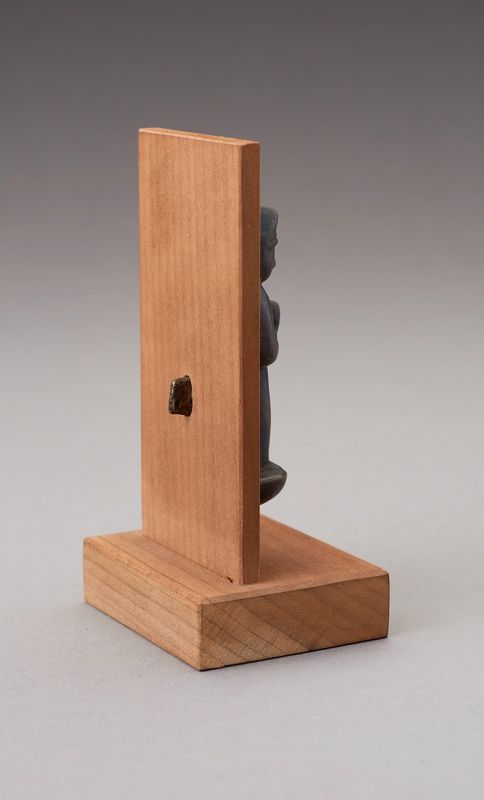
In well-preserved antique condition, this piece is 1 inch across at its wides point (2.5cm), and stands 2.6inches tall (6.5cm). It comes mounted on a Japanese kiri wood stand custom made for this piece that stands 4.1 inches tall (10.5cm).
*** International shipping and insurance is included in the price.
Contact the gallery