A Scroll Mounted Letter by Master Poet Kobayashi Issa
- Artist:
- Master Poet Kobayashi Issa
- Era:
- Late Edo
- Price:
- $4,750
- Inquire:
- Contact gallery
- Similar artwork:
- Looking for something similar?
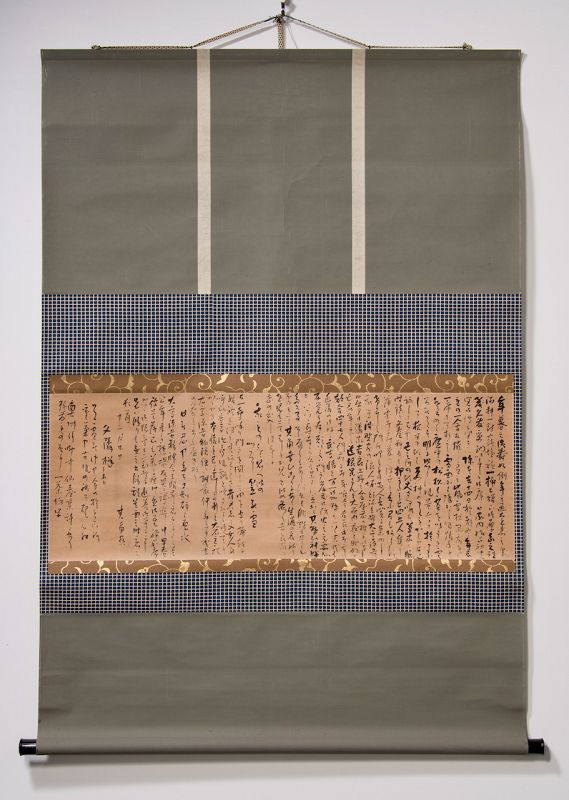
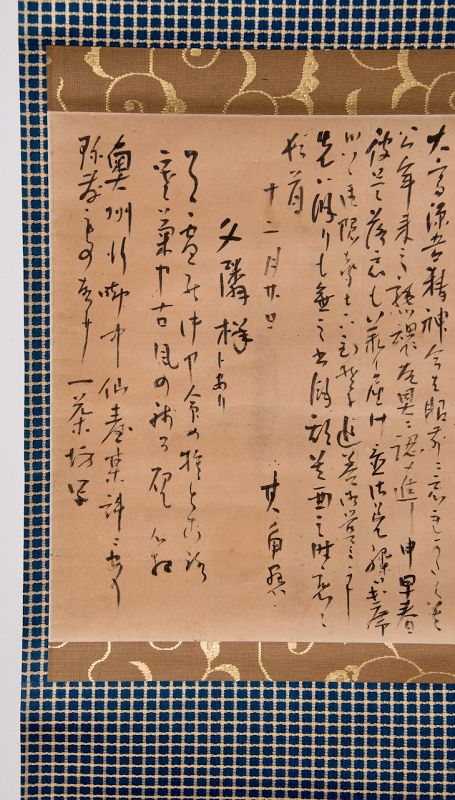
Here we have a scroll-mounted letter in a copy signed by the famed Japanese poet Kobayashi Issa (1763-1828), who is counted with Bashō and Buson among the three great masters of haiku. As one might expect, Issa's life was one of turbulence punctuated by several tragedies, including the death of his mother at an early age and a lengthy legal battle with his stepmother and half-brother over the family inheritance after the death of his father. Through it all Issa remained exceptionally prolific, turning out over 20,000 haiku verses during his lifetime. With an intense personality, an often shockingly dry wit, and a heretical tone, Issa's poems tend to cut to the core of the collective tragic comedy known as humanity, attempting to reconcile our divine nature in spite of things, as can be gleaned from the following example: "This dewdrop world -- Is a dewdrop world, And yet, and yet . . ."
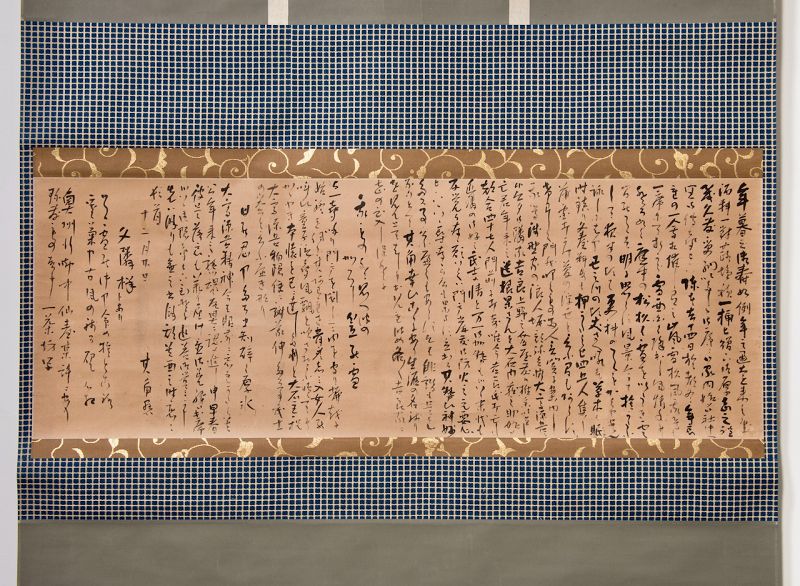
The text is Issa's copy of a celebrated letter attributed to Takarai Kikaku (1661-1707), Bashō's leading disciple, addressed to a haikai friend named Bunrin. In his closing note Issa records that he came upon the letter at a house in Sendai during his travels through Ōshū and copied it as a rarity. The Kikaku letter itself is generally regarded as apocryphal, one of many texts that grew up around the story of the Forty-Seven Rōnin and circulated in manuscript.
In the letter, Kikaku begins in typical Japanese fashion with mundane matters, in this case thanks for year-end gifts and news of a year-end gathering:
At the end of the year, thank you for the gift of sake and pickled vegetables from afar as usual, and convey my regards to your household and other members of your circle.
This year's year-end party was held on the 14th, and Ransetsu, Shōfū, and I got together.
It then turns to the events of the Akō Vendetta, better known in Japanese literature and theatre through the fictionalized story of the 47 Rōnin, or "Chūshingura." Kikaku recounts witnessing the night of the attack:
Snow began to fall, the pines and cedars were capped with white, and the quality of the light shining through the clouds made for a scene too fine to leave. Near midnight we were composing verses, saying the moon at Sarashina must have been just like this. And then, well past midnight—a quiet time when even the dogs do not bark and the plants are asleep—we had pushed aside the writing desk and lay under the quilts, and, before we could so much as get a hint of this dreamlike floating world, there came a loud knocking at the gate. Two men, guided to the entrance, declared, "We are Horibe Yahei and Ōtaka Gengo, rōnin of the house of Asano..."
Kikaku runs out to see the rōnin enter Kira's mansion and offers his famous verse:
It is my own:
how light it feels,
the snow upon my hat
The letter goes on to record the rōnin's success at dawn and Ōtaka Gengo's verse:
The sun's grace:
in an instant it shatters
the thick ice
Two further hokku follow the letter, possibly Issa's reply to the words of Kikaku; followed by his closing note:
Amid the moon and snow,
where you would throw away your life
Cold chrysanthemums,
and an old-fashioned
suzuri-bako
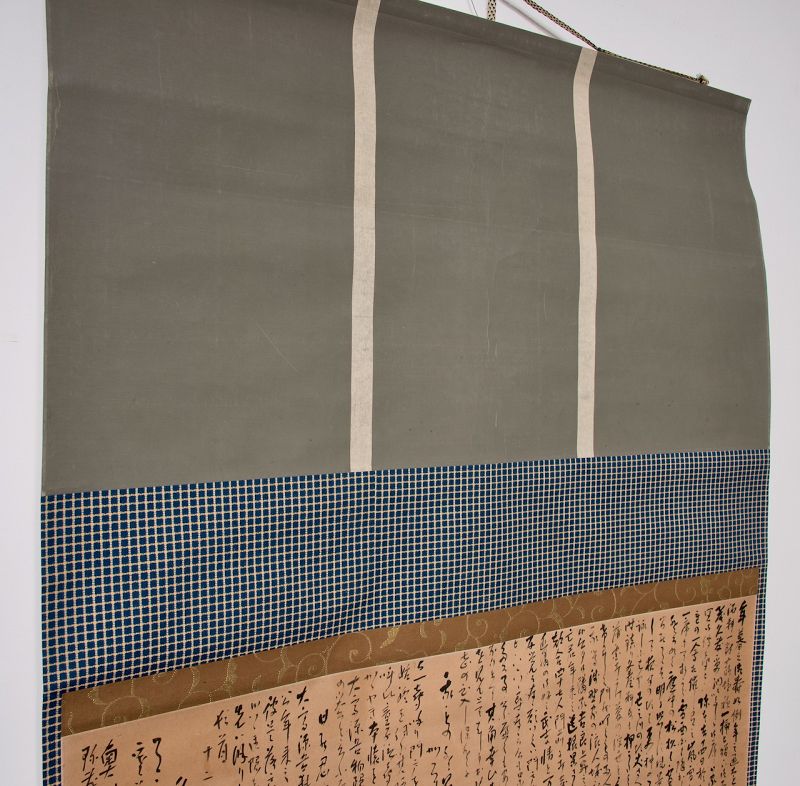
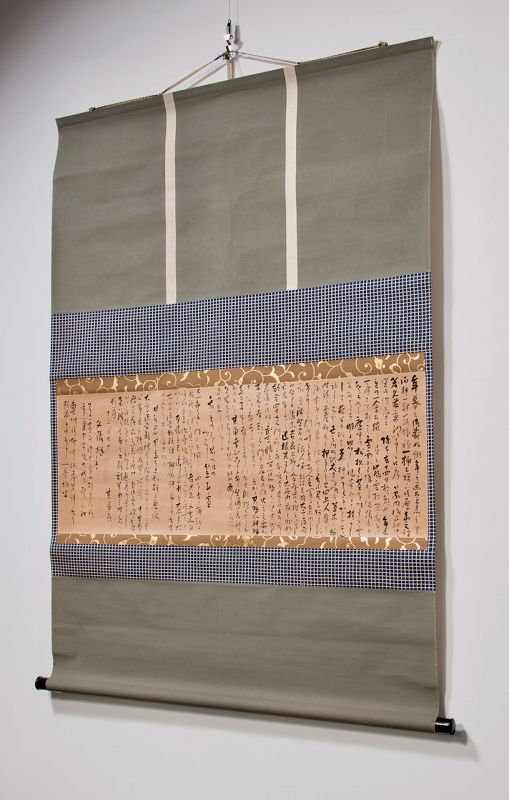
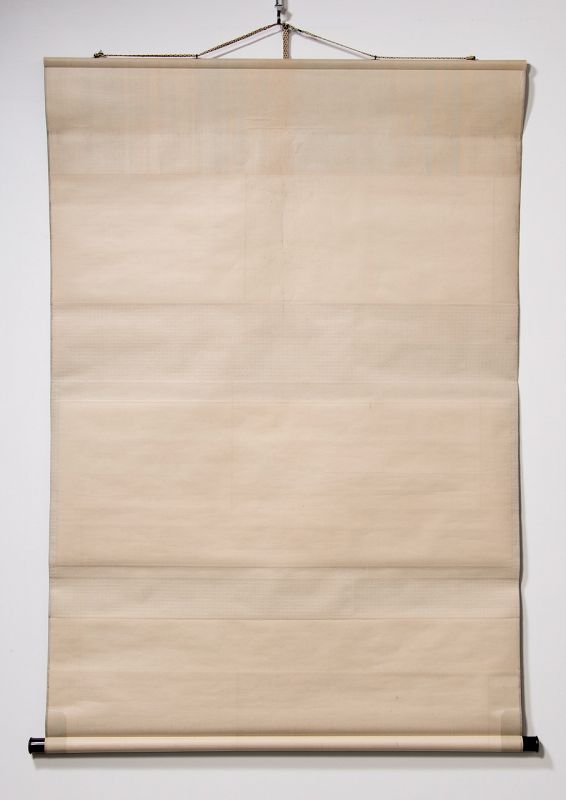
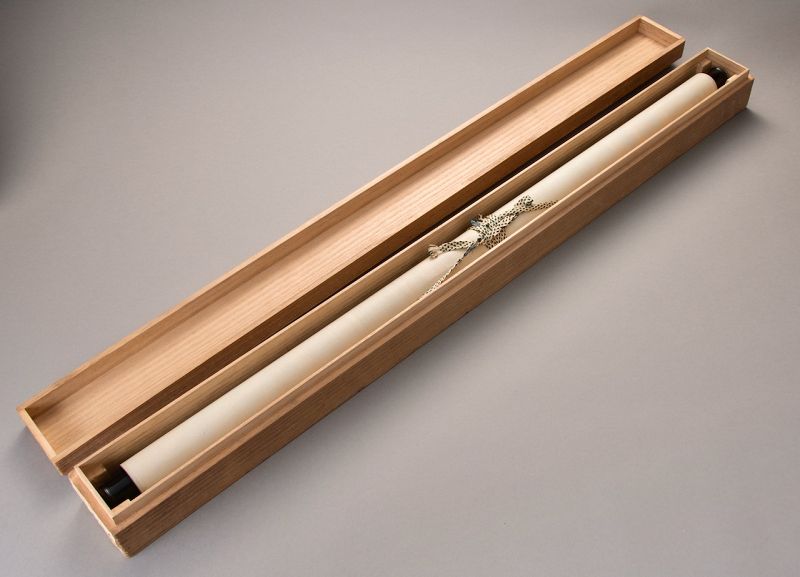
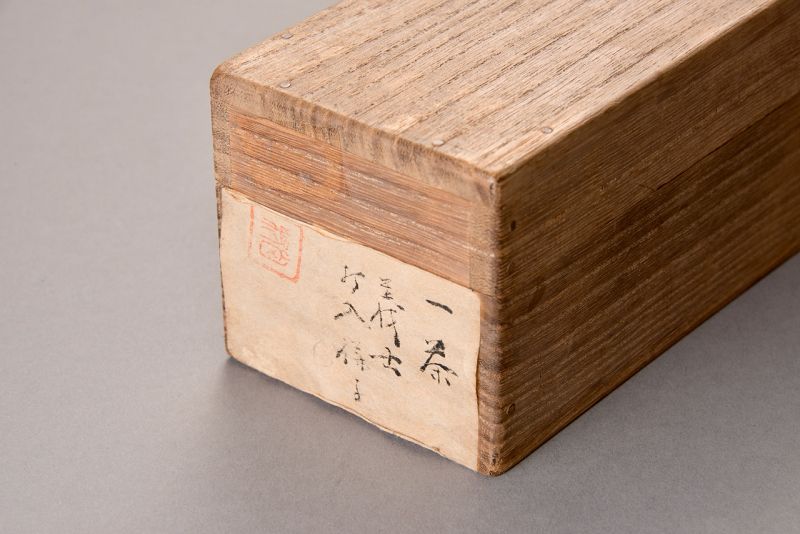
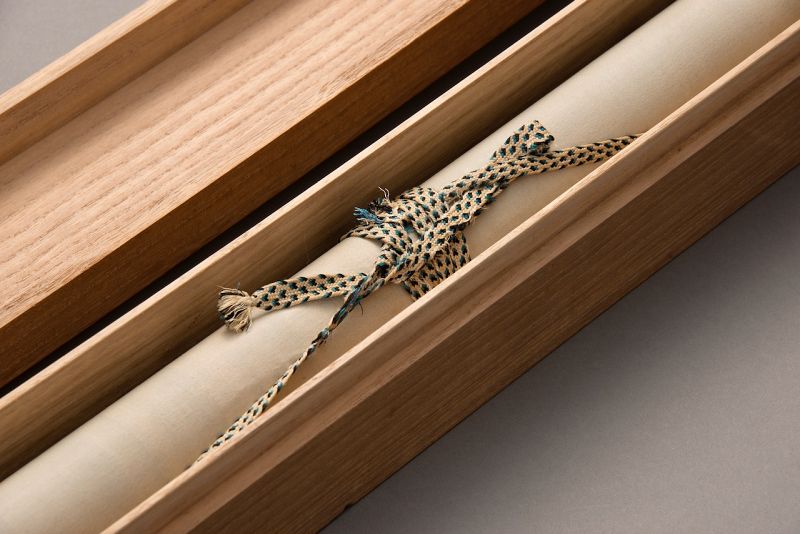
From the private collection of a hospital administrator in Hyogo prefecture full of museum quality pieces, this scroll-mounted letter is in fine antique condition. The scroll itself is 123cm tall and 92cm wide, with the text panel measuring 34cm tall and 82cm wide. It comes in a period wood box with characters reading "Issa," the poet's name meaning "a cup of tea." A full transcription and translation of the letter is available upon purchase. *** International shipping and insurance included in price.
Enquire with the gallery