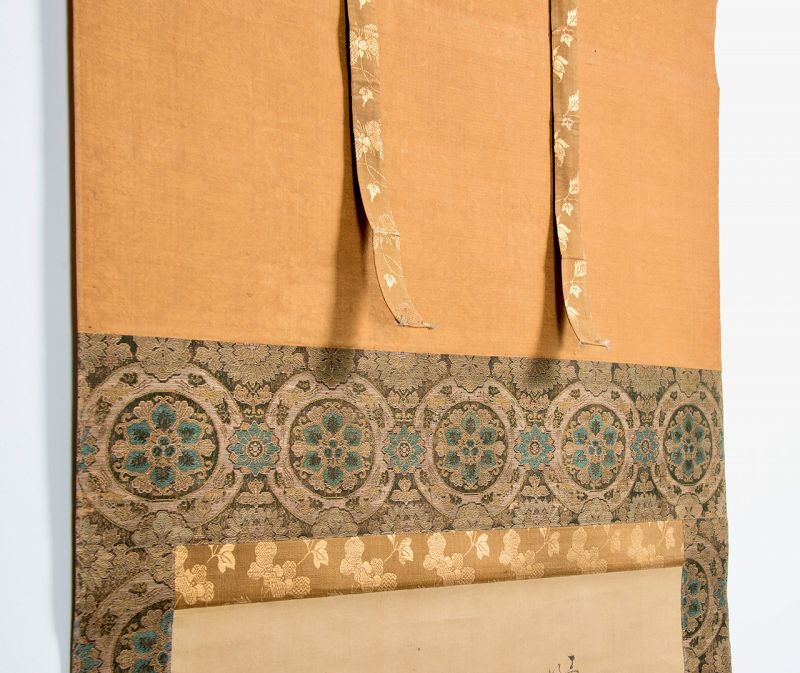
Hanging Scroll by Goshun Matsumura (1752 - 1811)
- Artist:
- Goshun Matsumura (1752 - 1811)
- Era:
- Mid Edo
- Price:
- SOLD
- Inquire:
- Contact gallery
- Similar artwork:
- Looking for something similar?
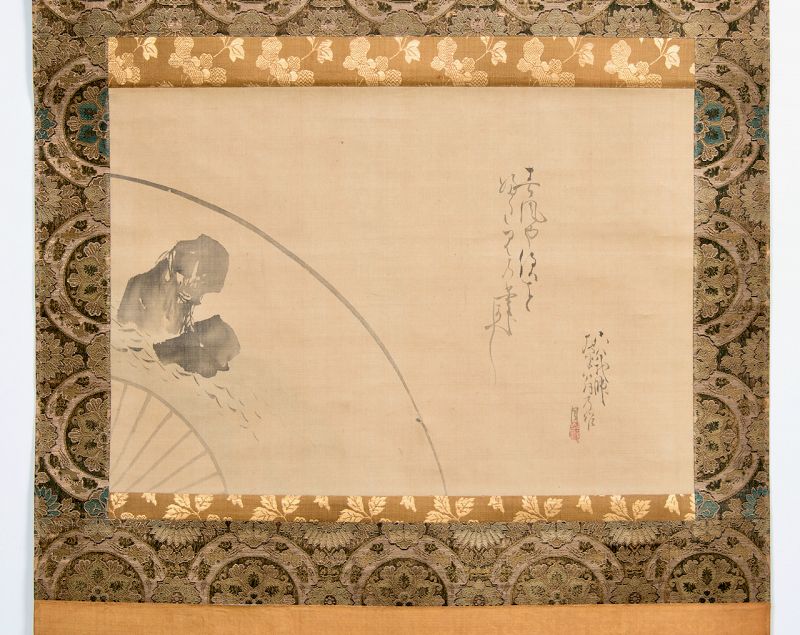
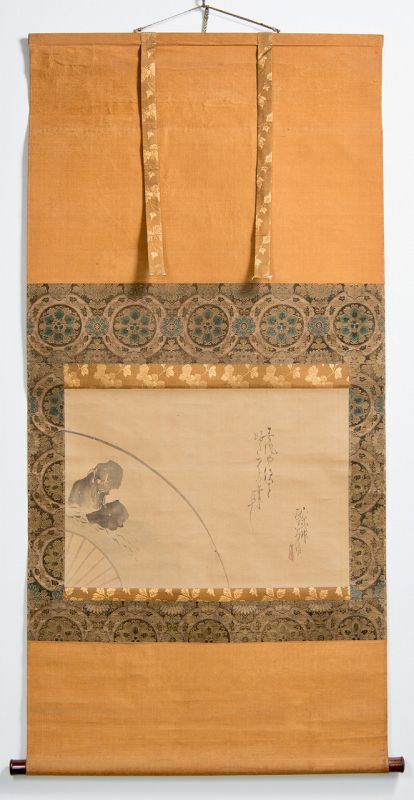
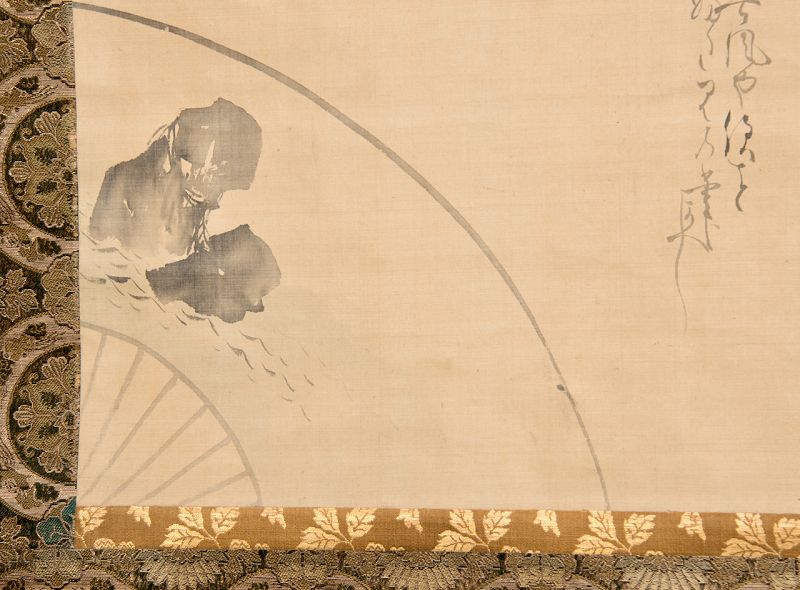
This Edo period scroll depicts Meota Iwa—a famous Japanese landmark in Mie. Symbolizing the union between two divine deities, Izanagi (said to be the larger rock, though there is no consensus on this point) and his wife Izanami, the two are joined by a shimenawa (heavy straw rope used in Japanese Shinto ceremonies). This straw rope is quite massive and must be replaced several times a year in a special ceremony. One could think of this in terms of the care and maintenance required to keep a marriage (even a divine one) strong and connected over the course of long life.
The poem on the scroll reads:
Shunpu ya nami wo, futami no fude-gaeshi
Spring breeze and waves, check twice my writing desk
** A “fude-gaeshi” is an angled decorative edge to a desk or shelf to keep objects such as writing brushes from rolling off.
** “Futami” here likely means “double-check” however, could possibly be the name of a shrine located overlooking Meota-Iwa.
The creator of this piece was a student to legendary painter Yosa Buson (1716–1784) and friend of the founder of the Maruyama school, Maruyama Ōkyo (1733–1795); these two mentors would have a profound impact on the trajectory of Matsumura’s career as a painter. Early on he created artworks faithfully in the Nanga and Literati styles of his teacher Buson and visiting scholars from China. Although he showed promise during this period, he had difficulty making a living as a painter and later was released from the service of Buson. Years later he would befriend Maruyama who was quite senior to Matsumura at the time and, although he was not taken on as a student, received informal mentorship from the great painter. During this period of his career the growing influence of Maruyama and the waning influence of Buson is apparent in his works. Ultimately, Matsumura would go on to found his own school of painting know as the Shijo School. The painting seen here is likely from an early time in the artist’s career when he emulated the work of Buson most closely.
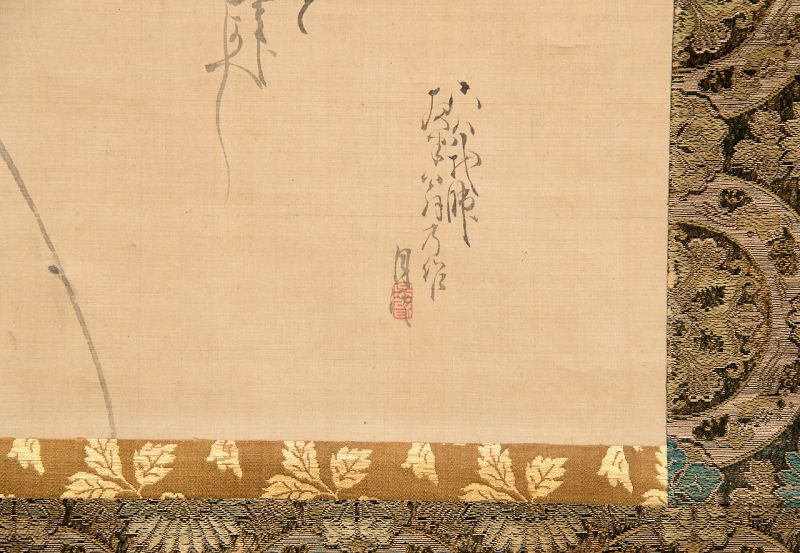
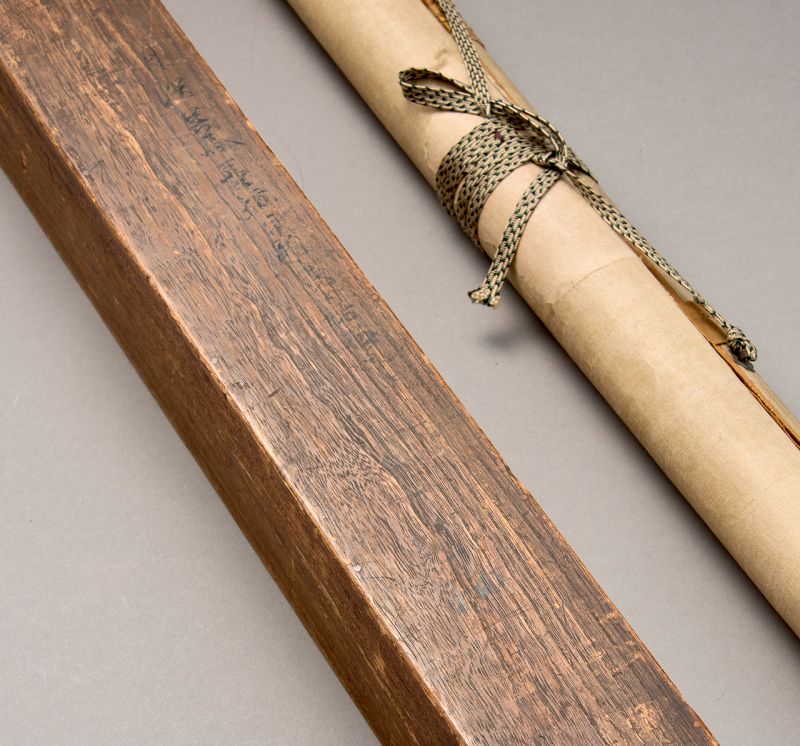
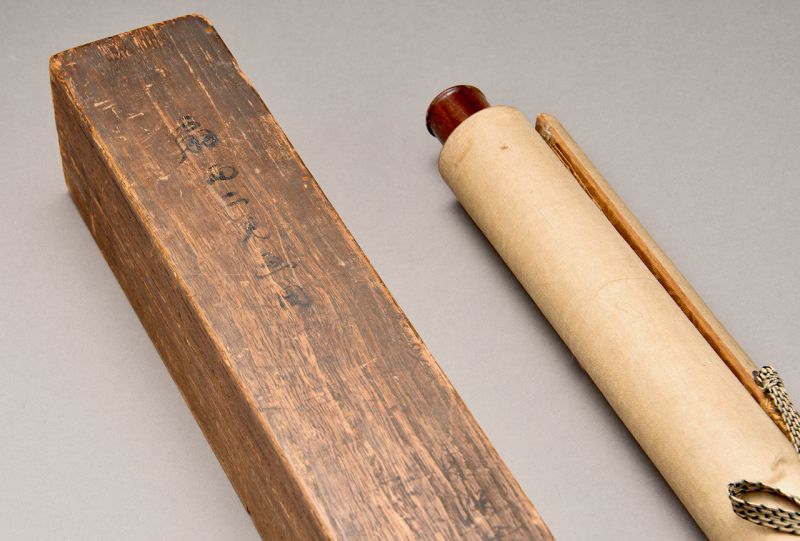
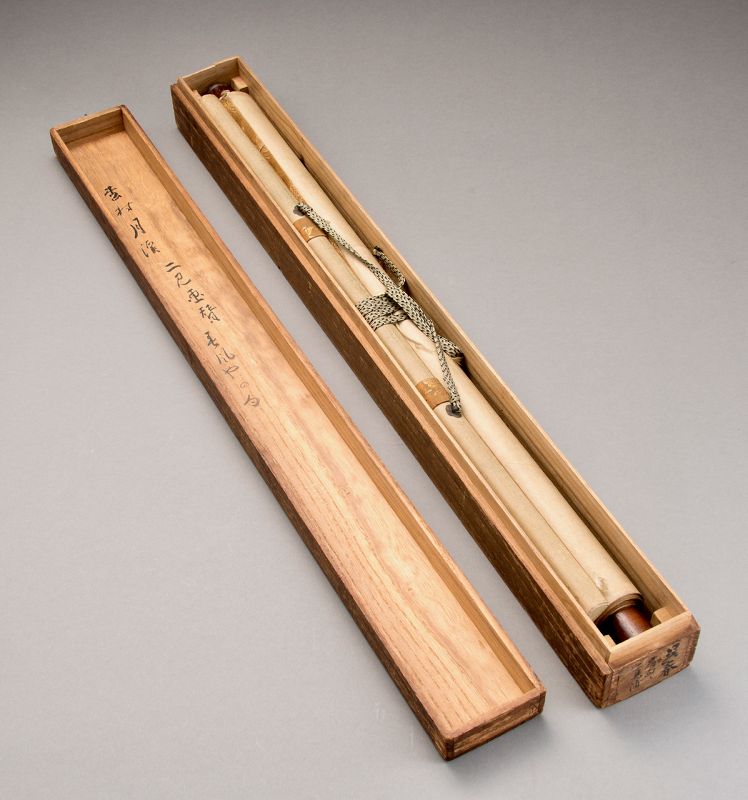
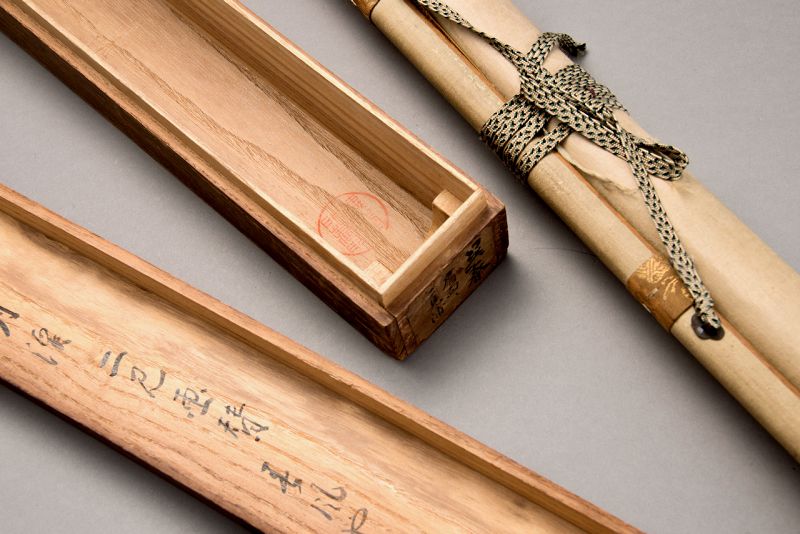
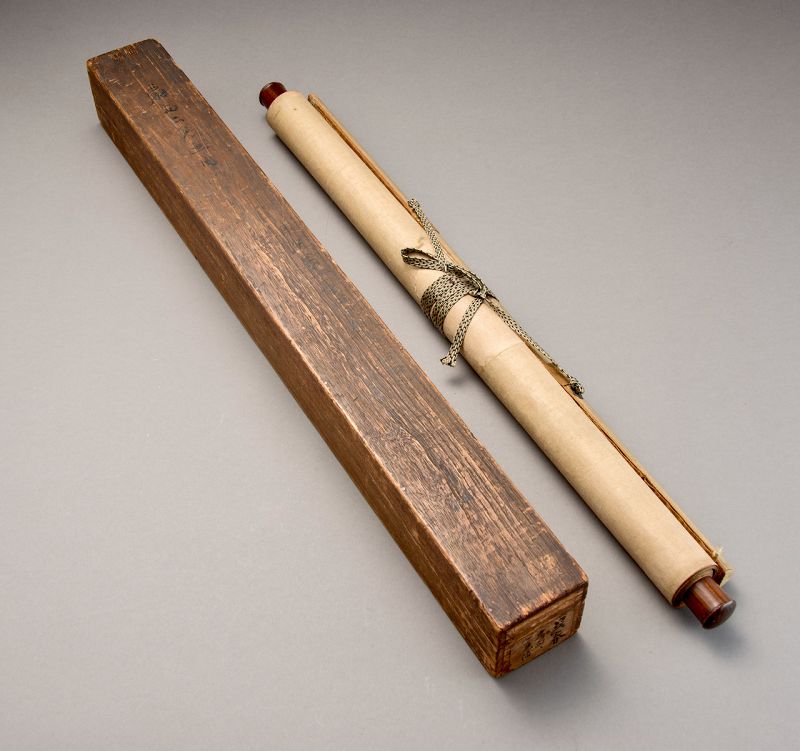
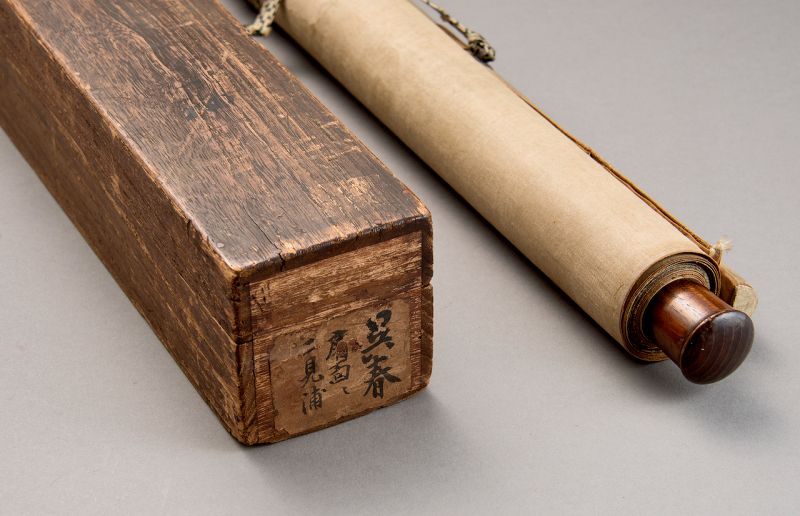
In fine antique condition, this hanging scroll is 118 cm tall and 58 cm wide with the artwork being 31 cm x 44 cm. Signed and sealed by Goshun Matsumura, it comes housed in a period wood box with inscription. (examples of signatures and seals available upon request). ** International shipping and insurance included in price.
Contact the gallery