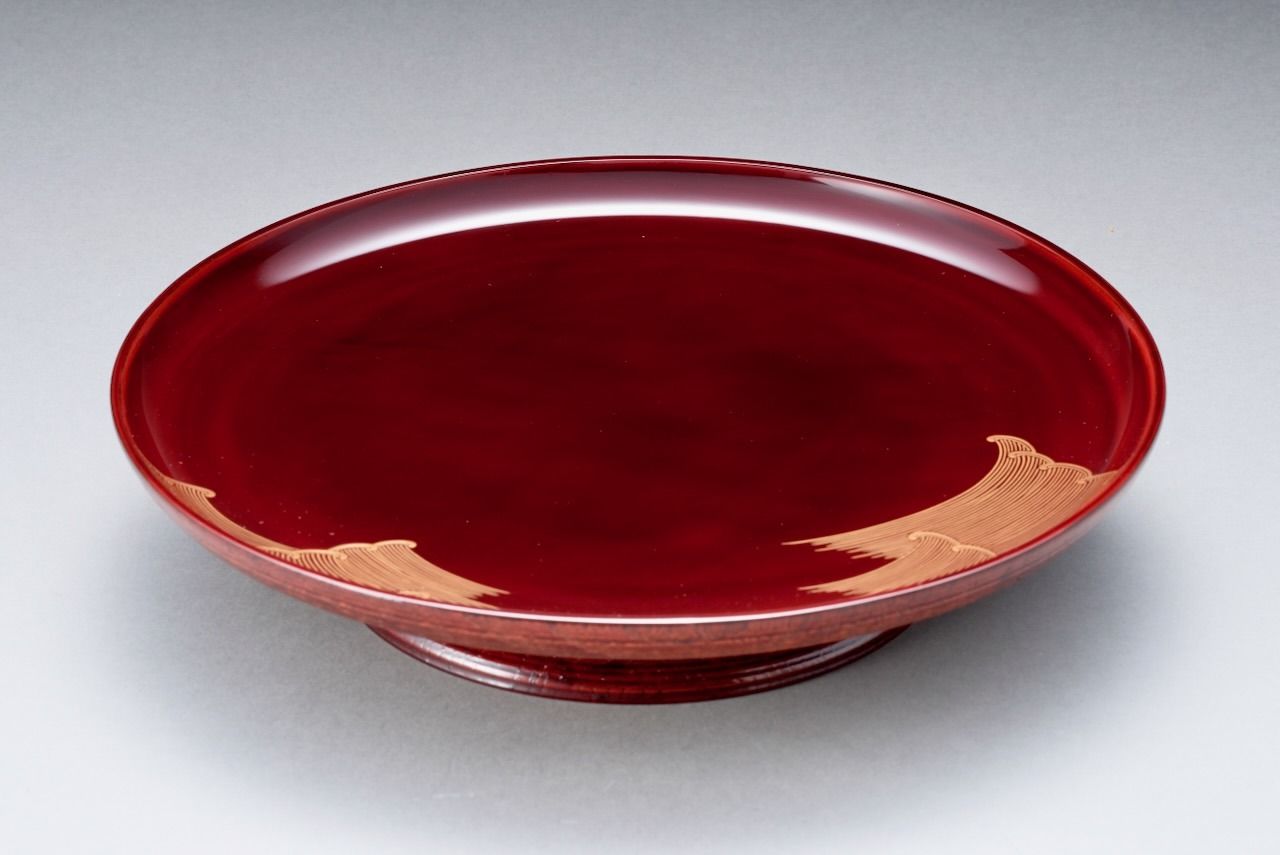
A Natorigawa Maki-e Sweets Dish - Maehata Shunsai III (b. 1964)
- Artist:
- Maehata Shunsai III
- Era:
- Contemporary
- Price:
- $775
- Inquire:
- Contact gallery
- Similar artwork:
- Looking for something similar?
- Medium:
- Tamenuri lacquer on zelkova with gold maki-e
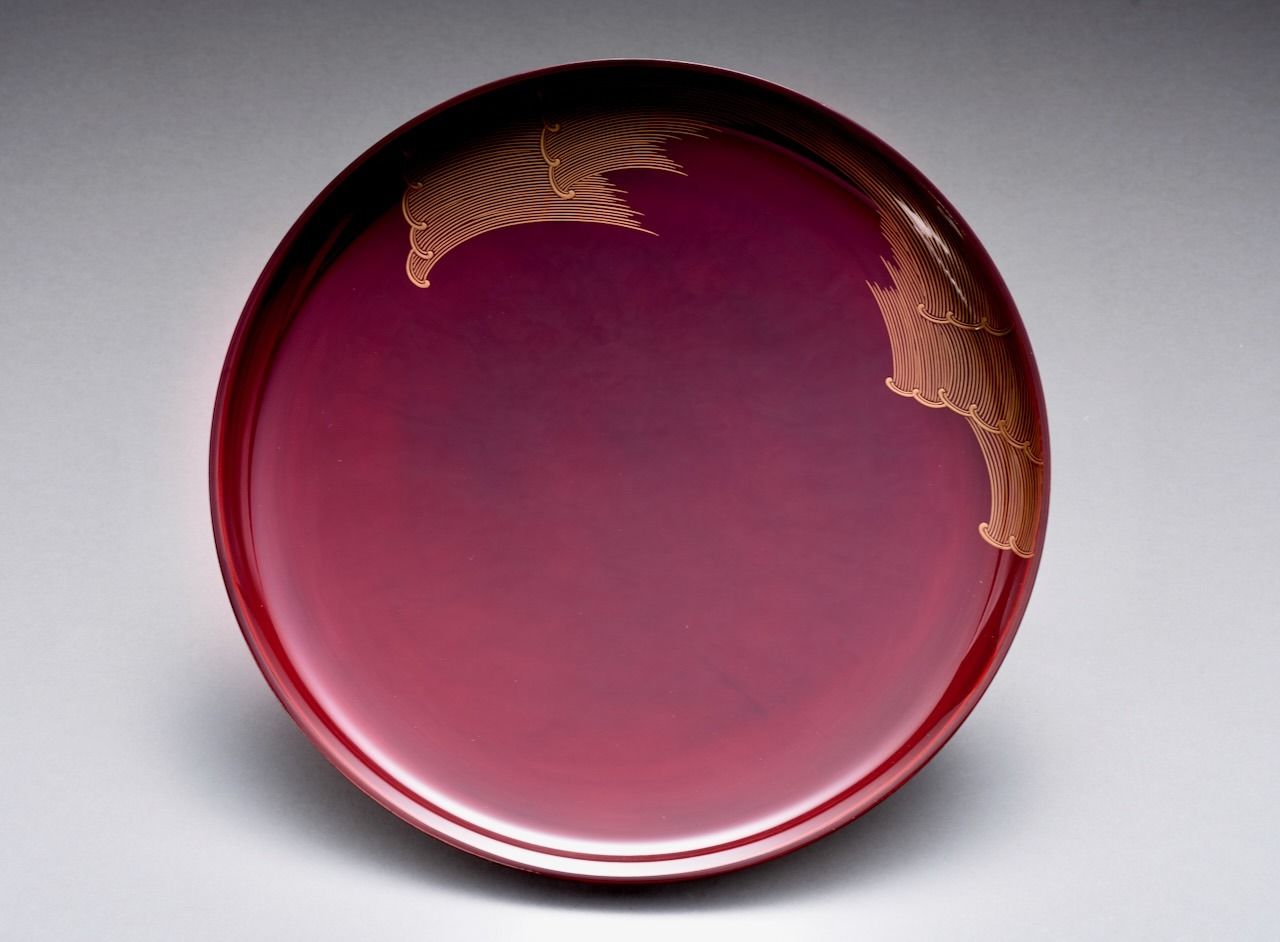
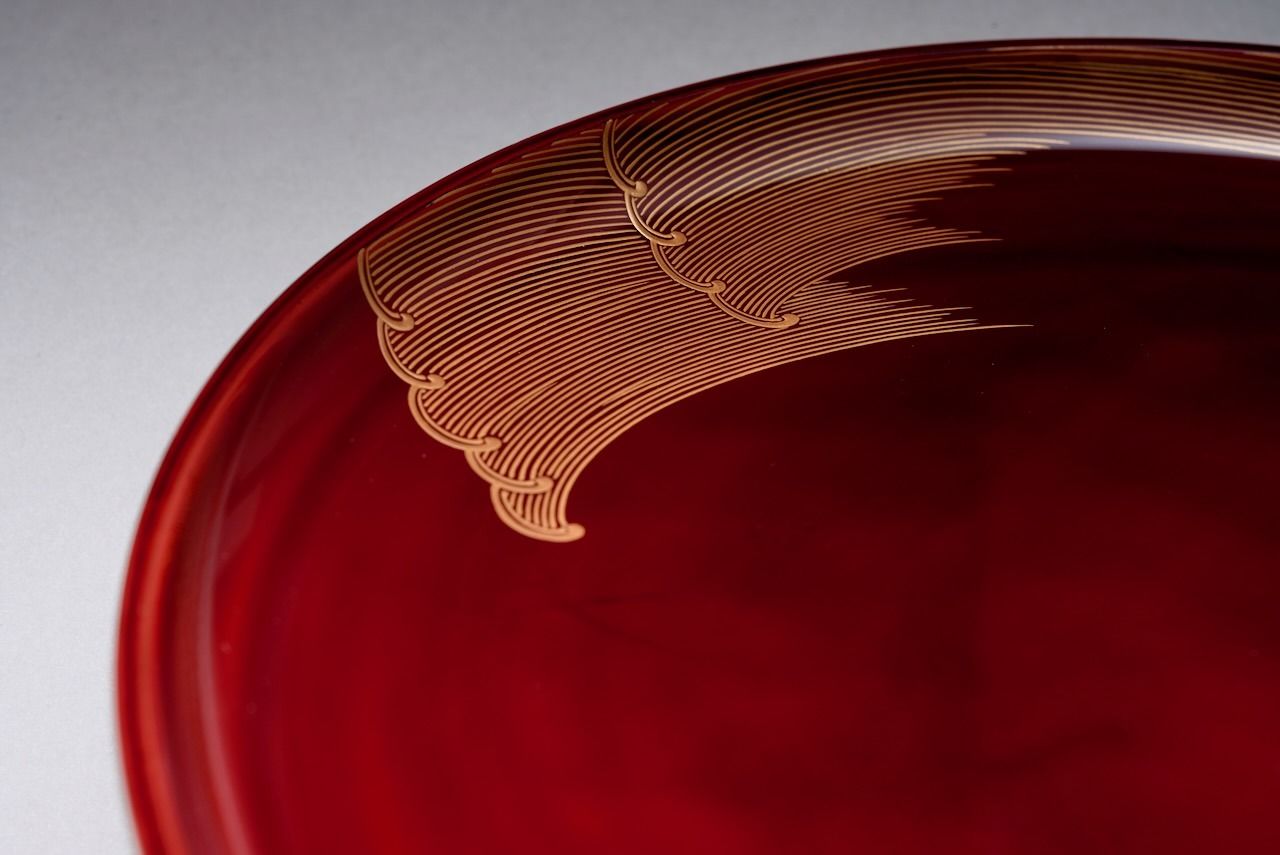
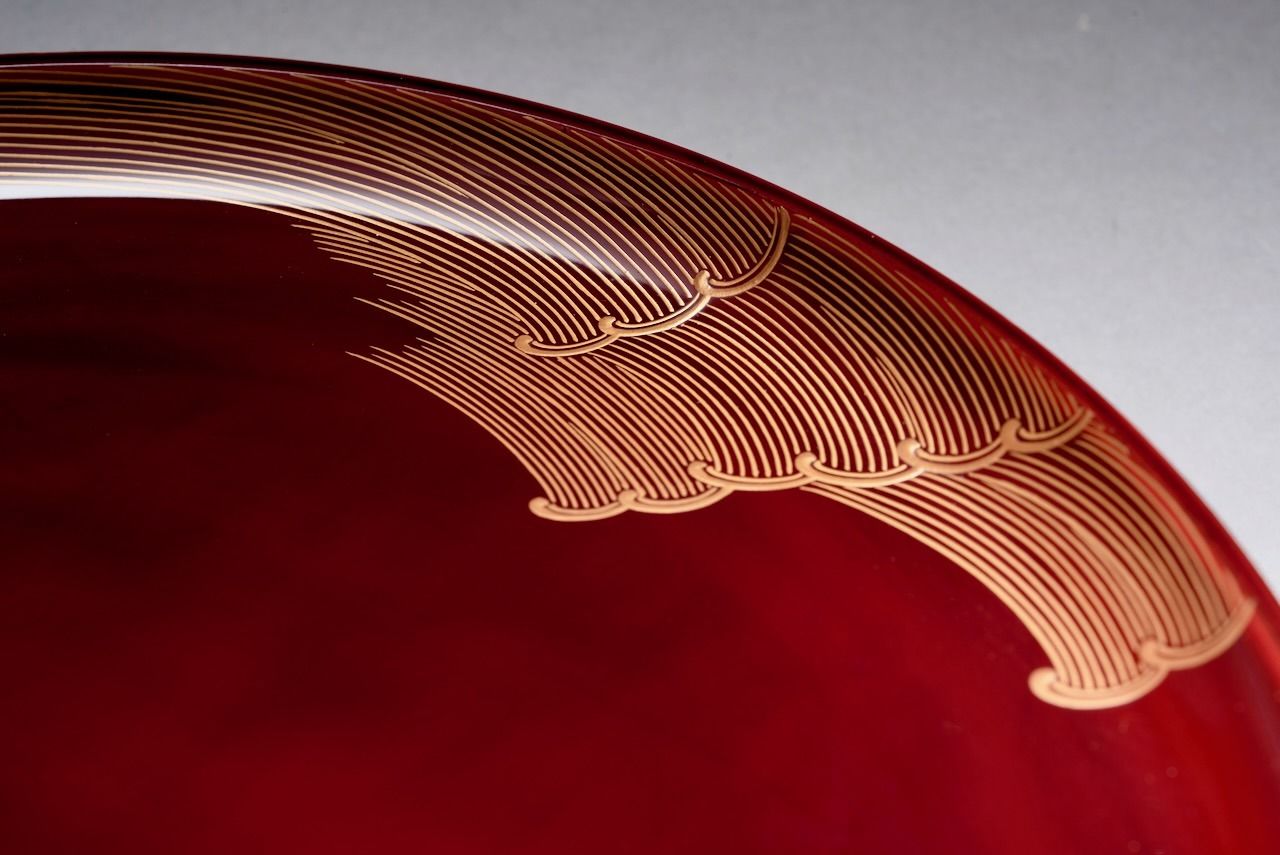
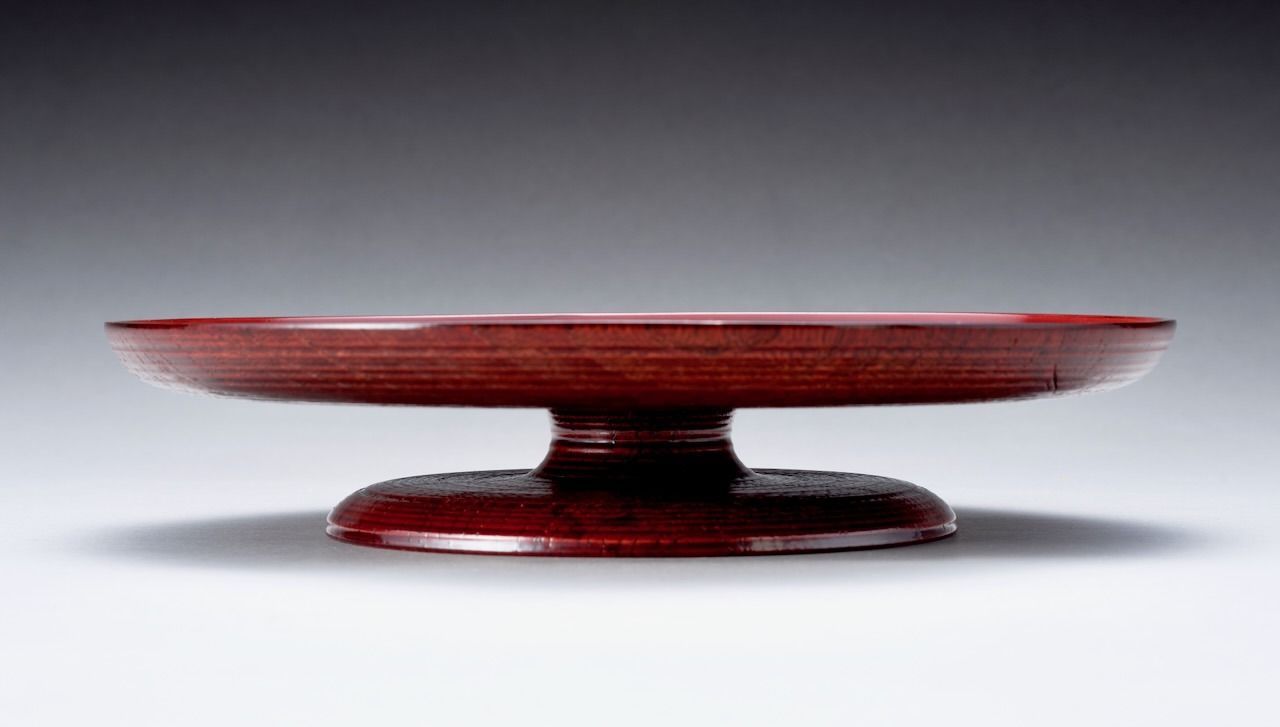
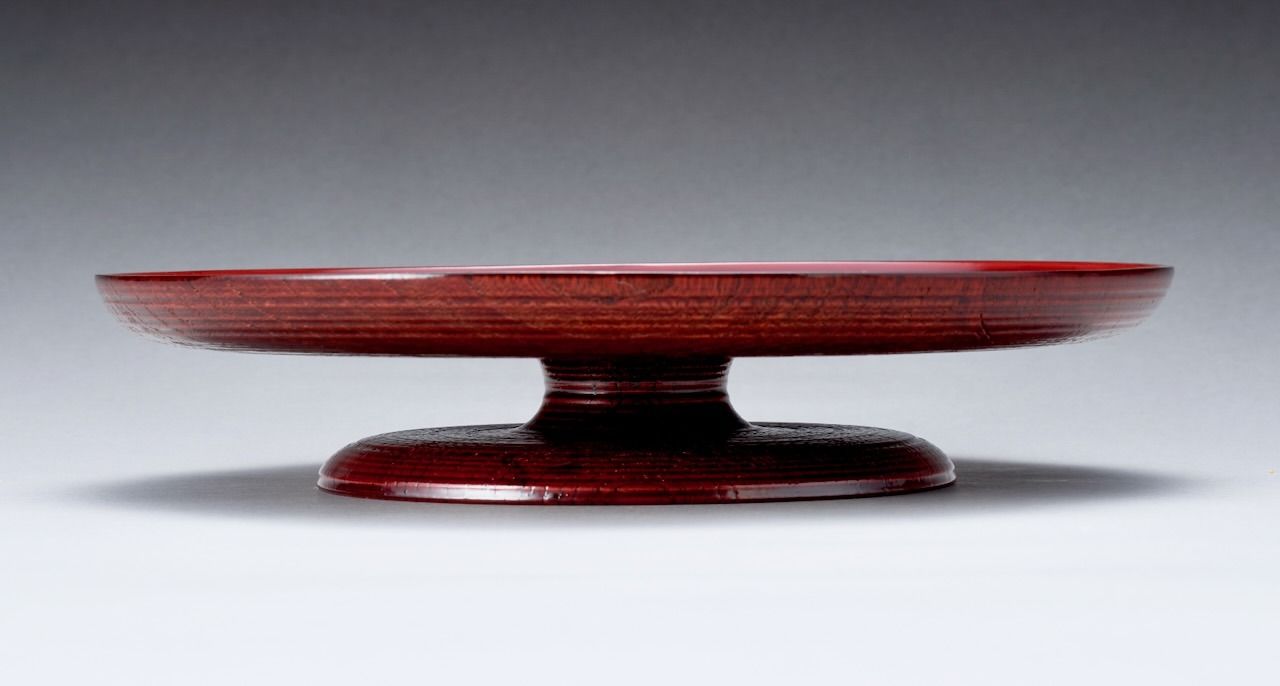
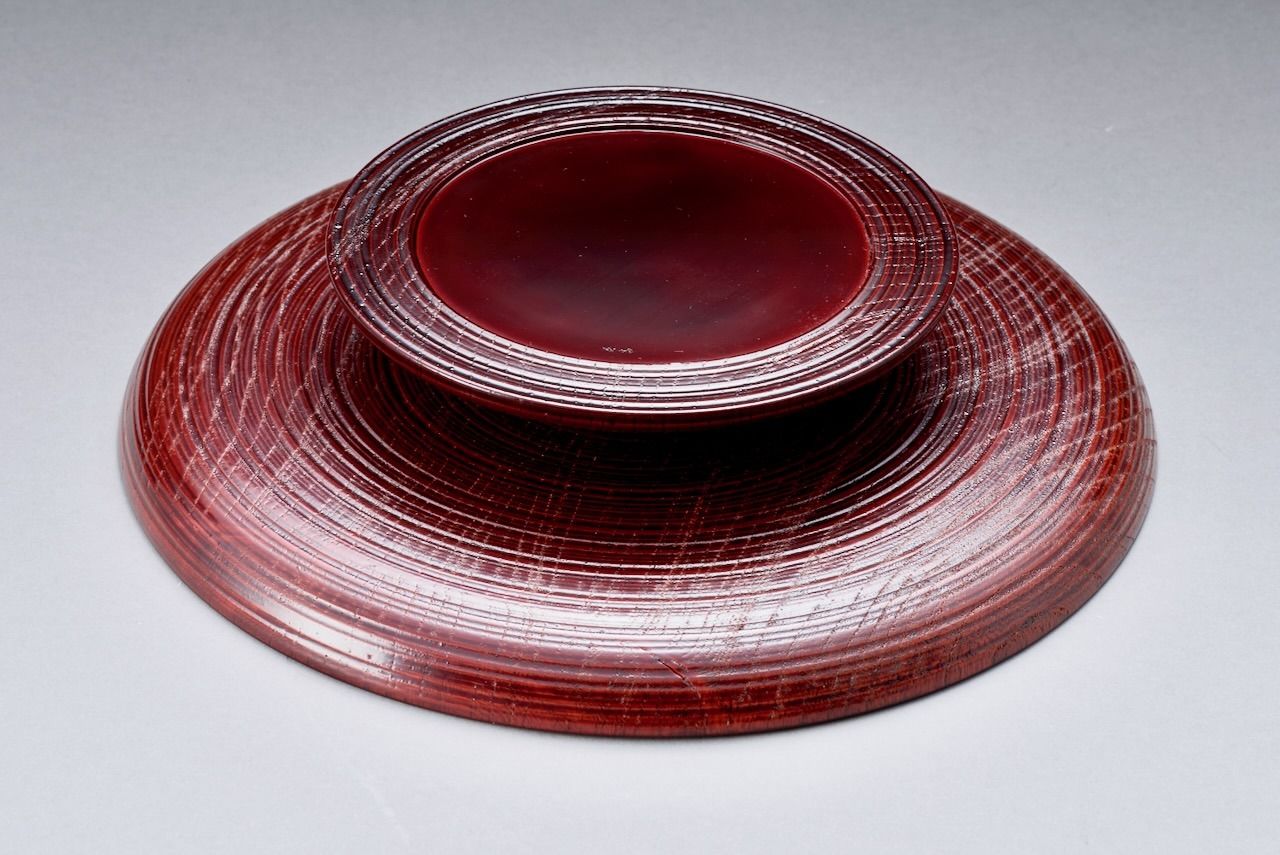
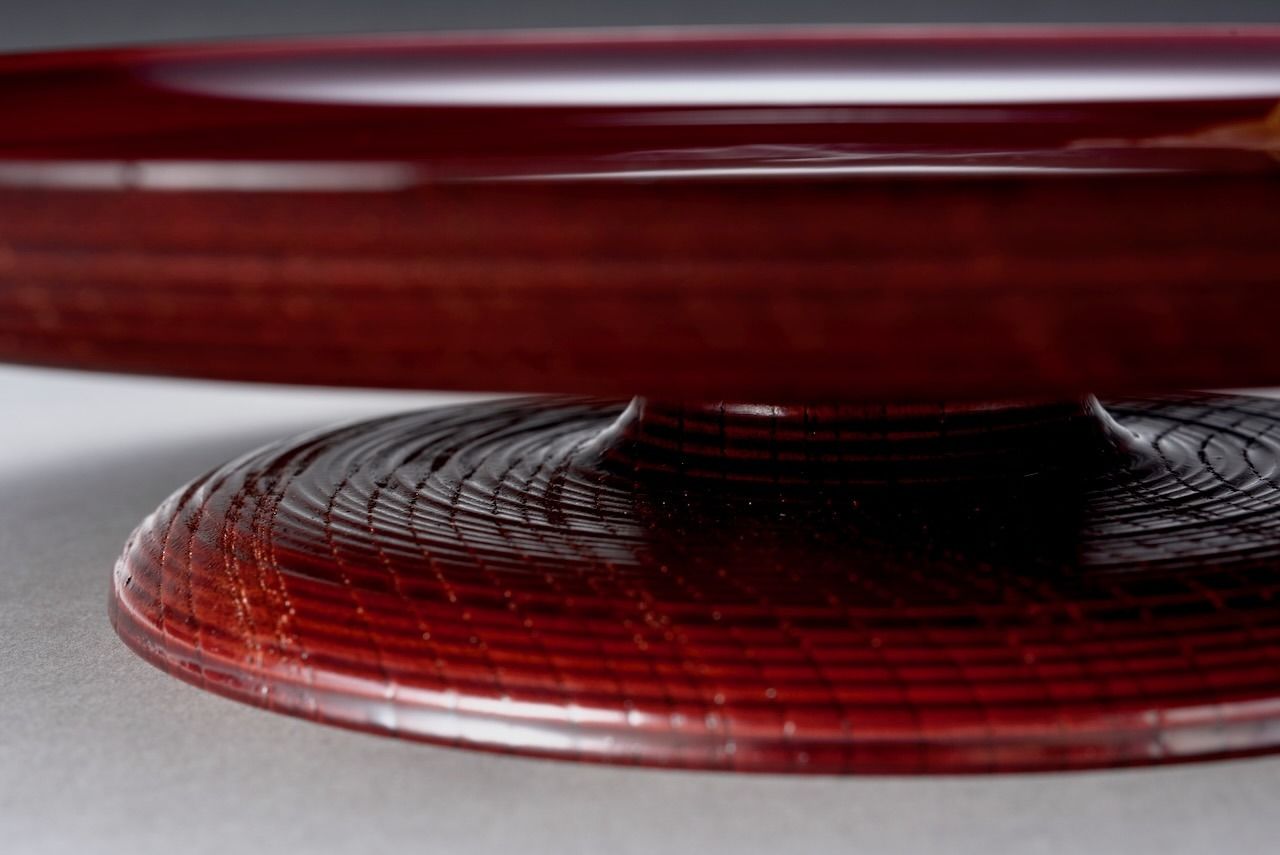
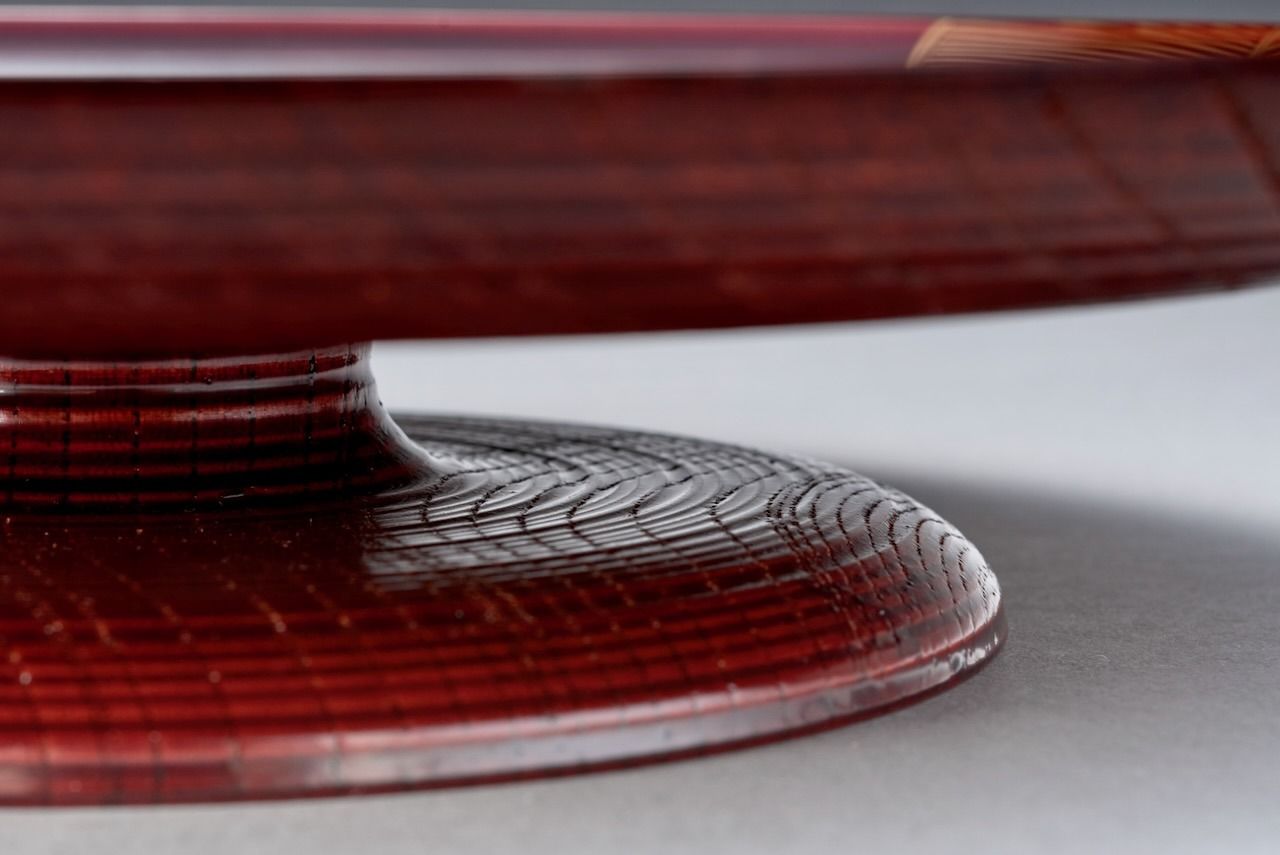
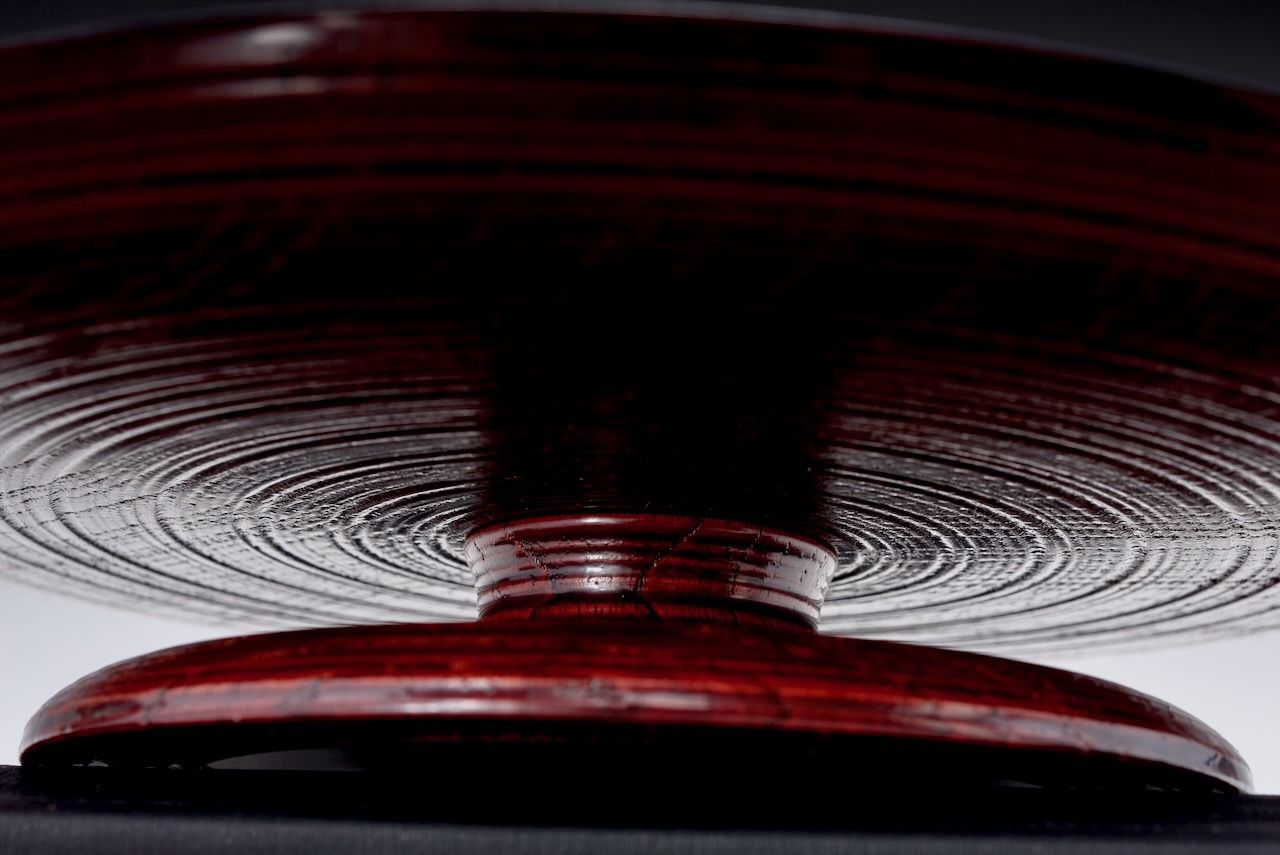
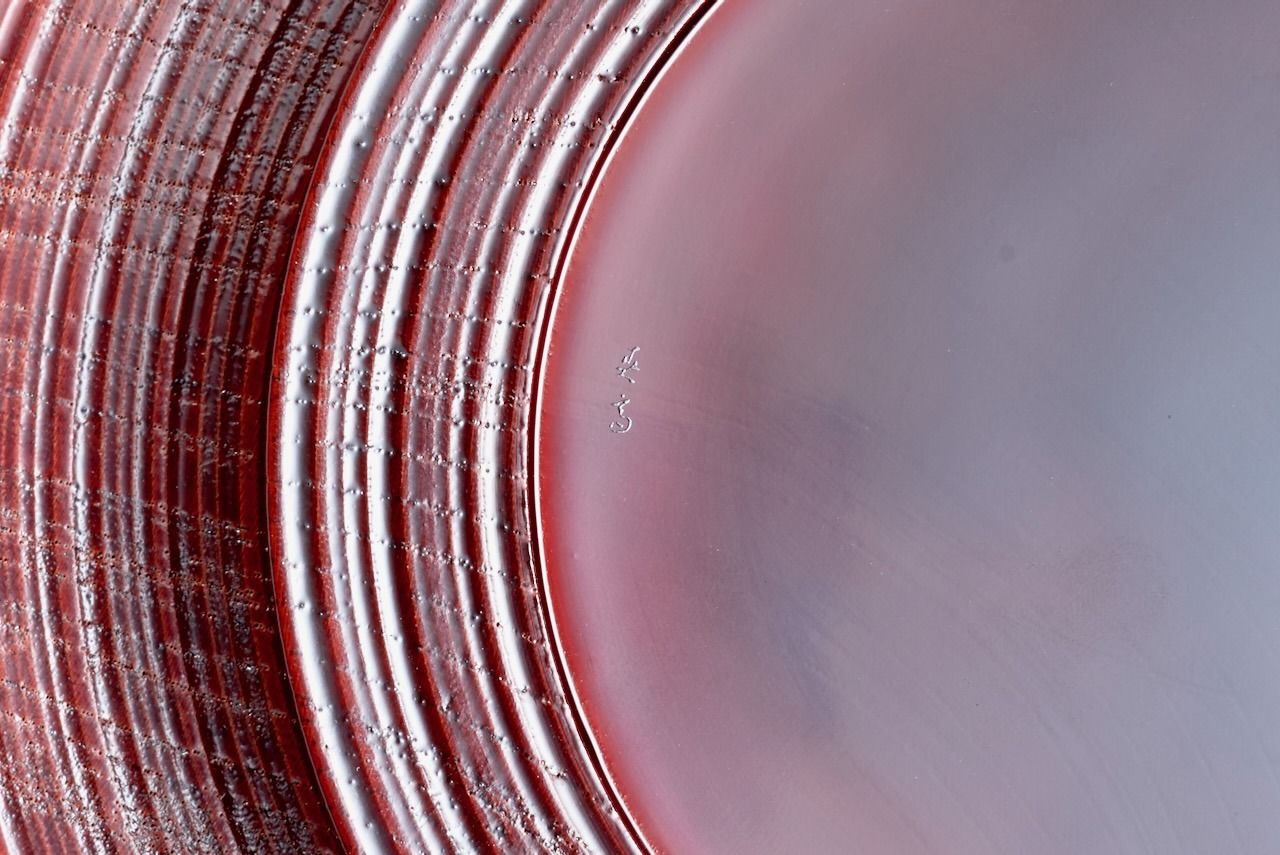
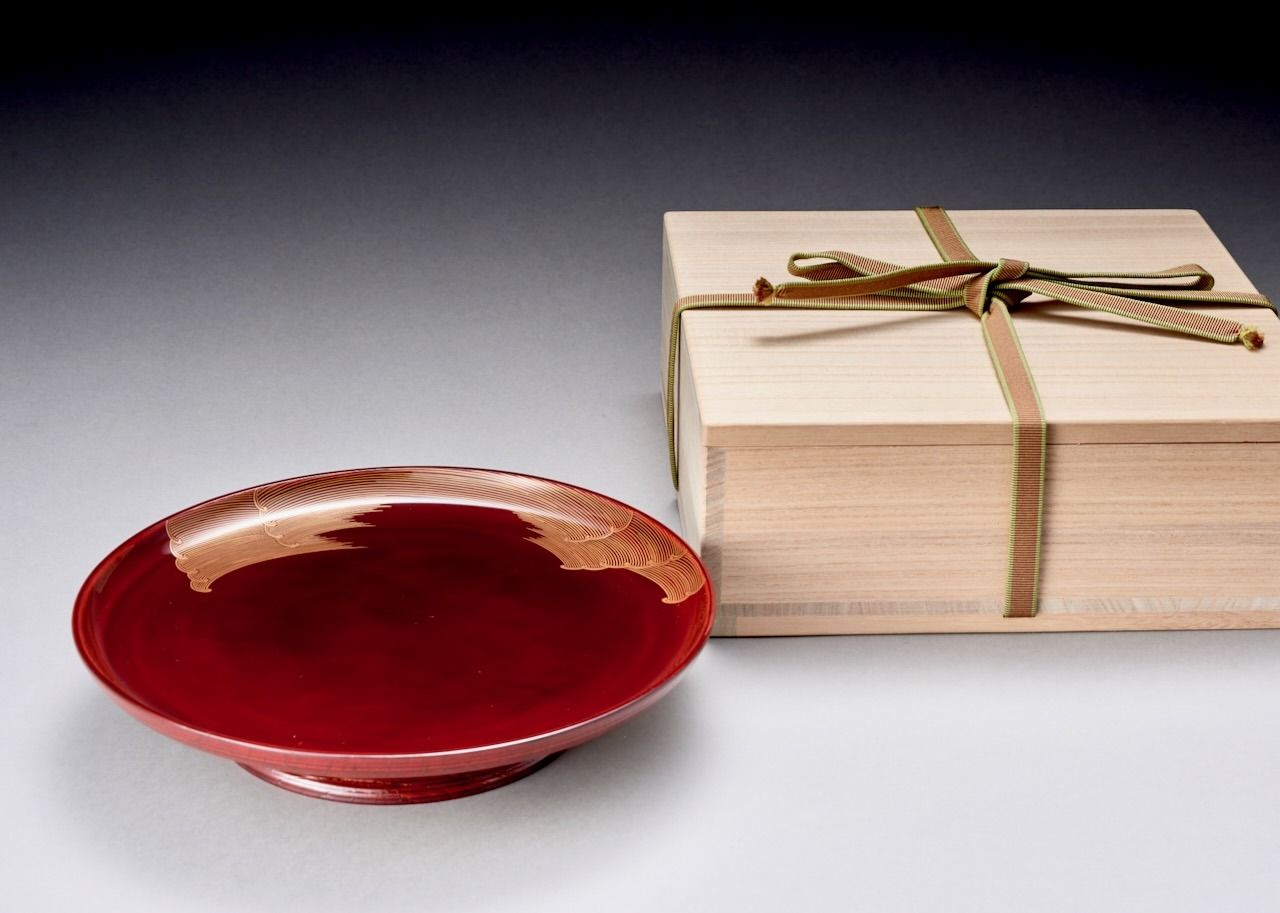
A footed dish for dry sweets at tea, turned from zelkova and finished in mirror-bright red tamenuri lacquer. Two crests of breaking waves sweep in from the rim in finely drawn gold maki-e, each built from dozens of parallel gold lines, while the rest of the surface is left empty and the gold reads all the clearer for it. Beneath, the stem and foot are ring-incised so that the grain of the wood shows through the lacquer. In excellent condition, with no sign of use.
The design takes its name from the Natorigawa, the Natori River of Michinoku in the far north, one of the utamakura, or poetic place names, that classical poets returned to again and again. Its name plays on na toru, "to take on a name," and Mibu no Tadamine turned it to a lover's complaint in the Kokinshū: "In Michinoku, they say, flows the Natori River; to take on a name for what never was is bitter indeed." Here the river is evoked by its waves alone, leaving the poem for the guest to recall. Maehata Shunsai III (b. 1964), third of his line, works in Kaga maki-e, the tradition founded when the Maeda lords of Kaga brought the lacquer masters Igarashi Dōho and Shimizu Kuhei to Kanazawa in the 17th century. He has been recognised by the Japanese government as a Master of Traditional Crafts (dentō kōgeishi), and his work is held by the Minneapolis Institute of Art.
The dish is 9 inches in diameter (22.8 cm) and stands 1.8 inches tall (4.5 cm). It comes in its original paulownia box, signed and sealed by the artist, with its cloth.
*** International shipping and insurance are included in the price.
Supplementary resources
- Red Bowl with Golden Bamboo Decoration, Maehata Shunsai III — Minneapolis Institute of Art
- Kaga maki-e: history of the Kanazawa lacquer tradition — Japan Tourism Agency
- Lacquerware of East Asia, including maki-e — The Met
- Utamakura of Michinoku, including the Natorigawa and Tadamine's poem (Japanese) — Yamato Uta