A Mid-Edo Bizen Fresh-Water Jar (Mizusashi) with Box by Katsura Matasaburō
- Artist:
- Unattributed
- Era:
- Mid Edo
- Price:
- $2,250
- Inquire:
- Contact gallery
- Similar artwork:
- Looking for something similar?
- Medium:
- Bizen stoneware with natural ash; black lacquer lid
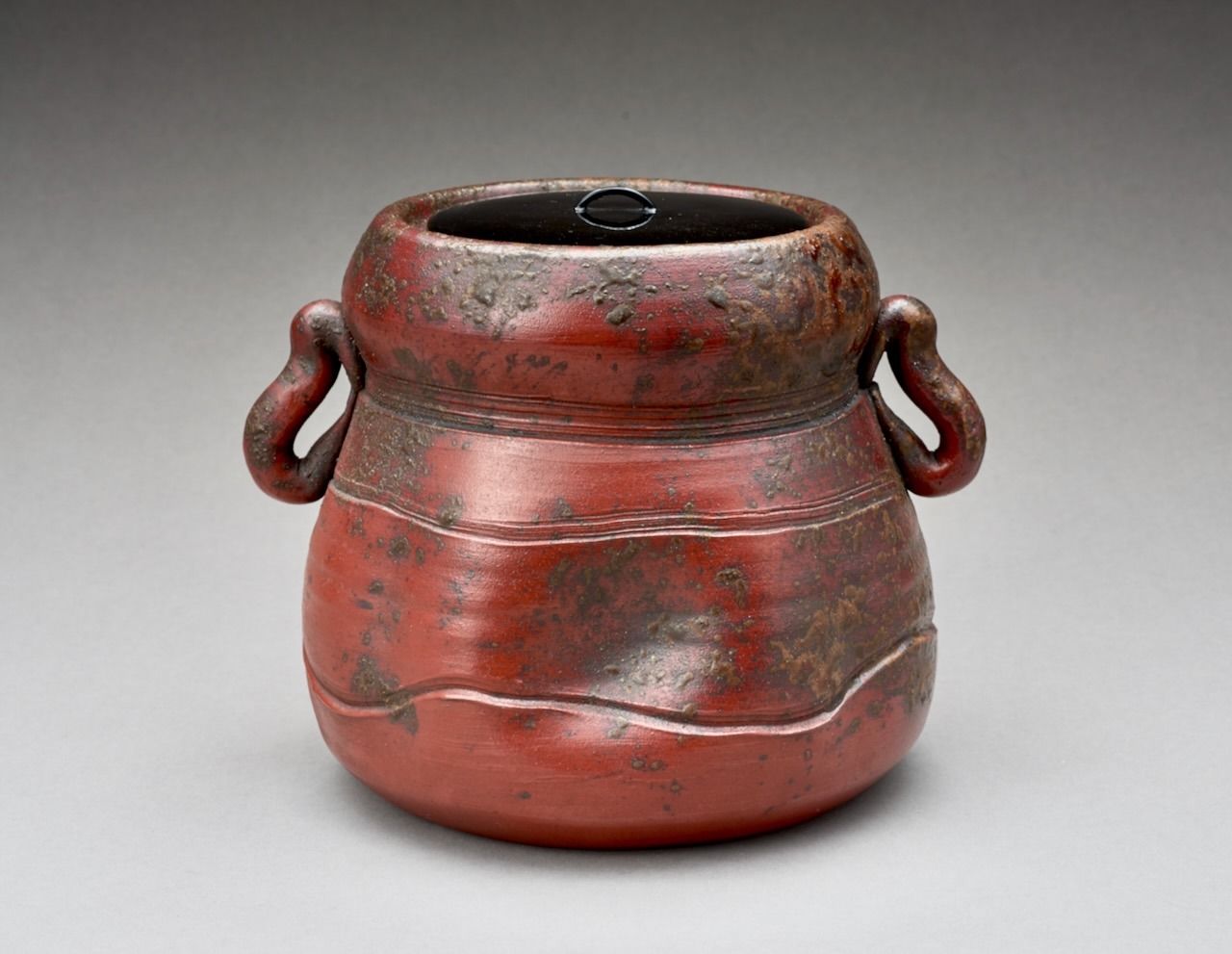
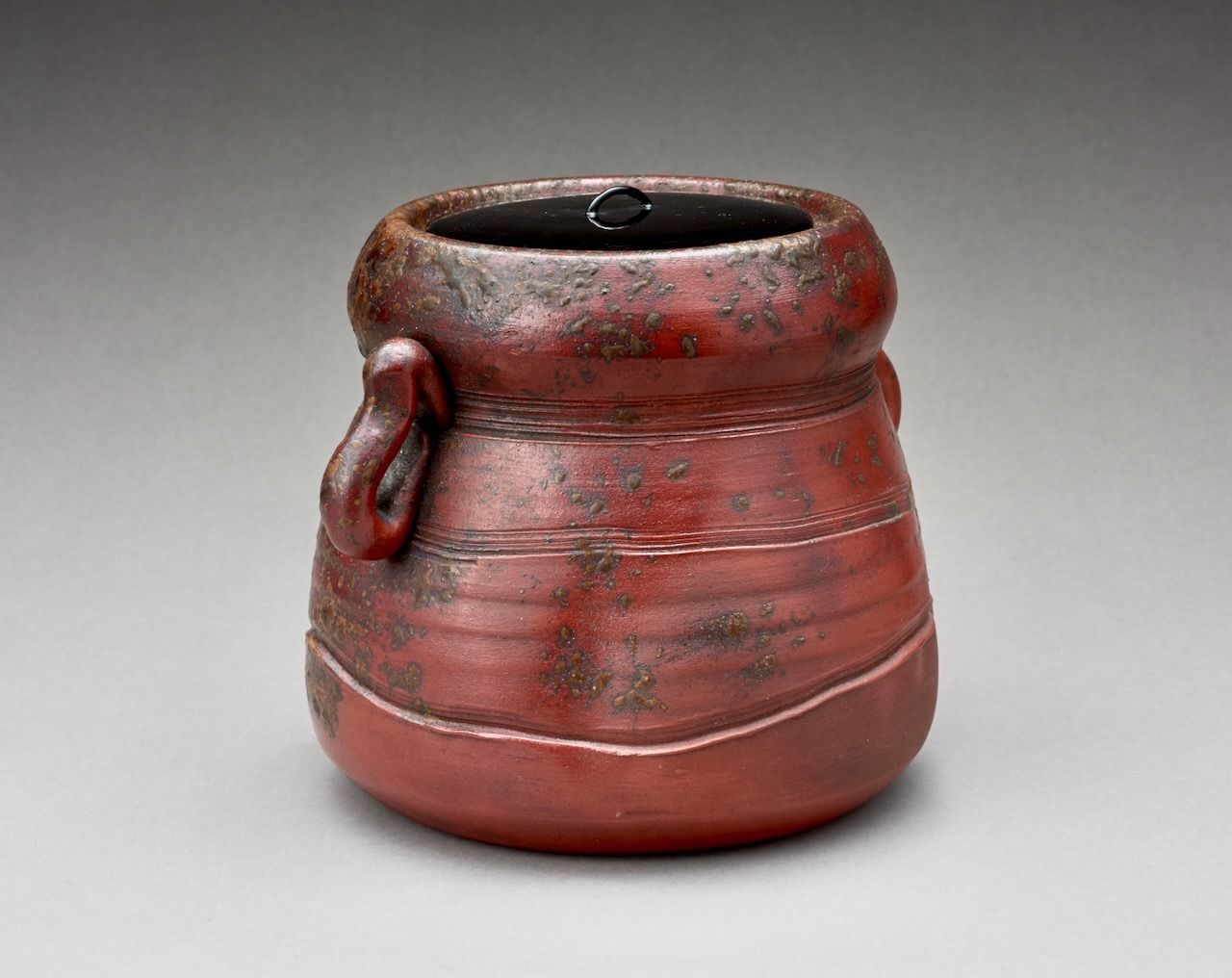
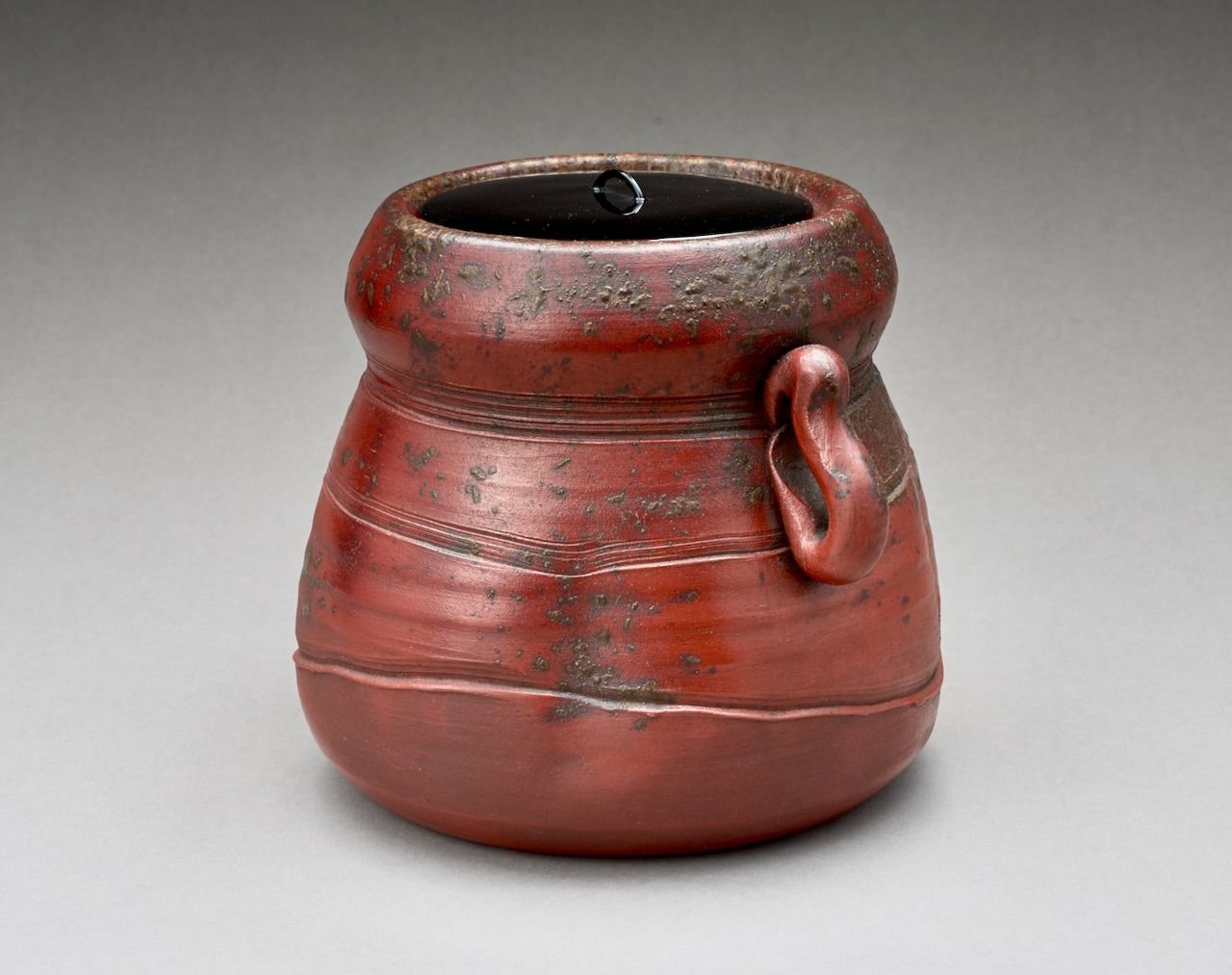
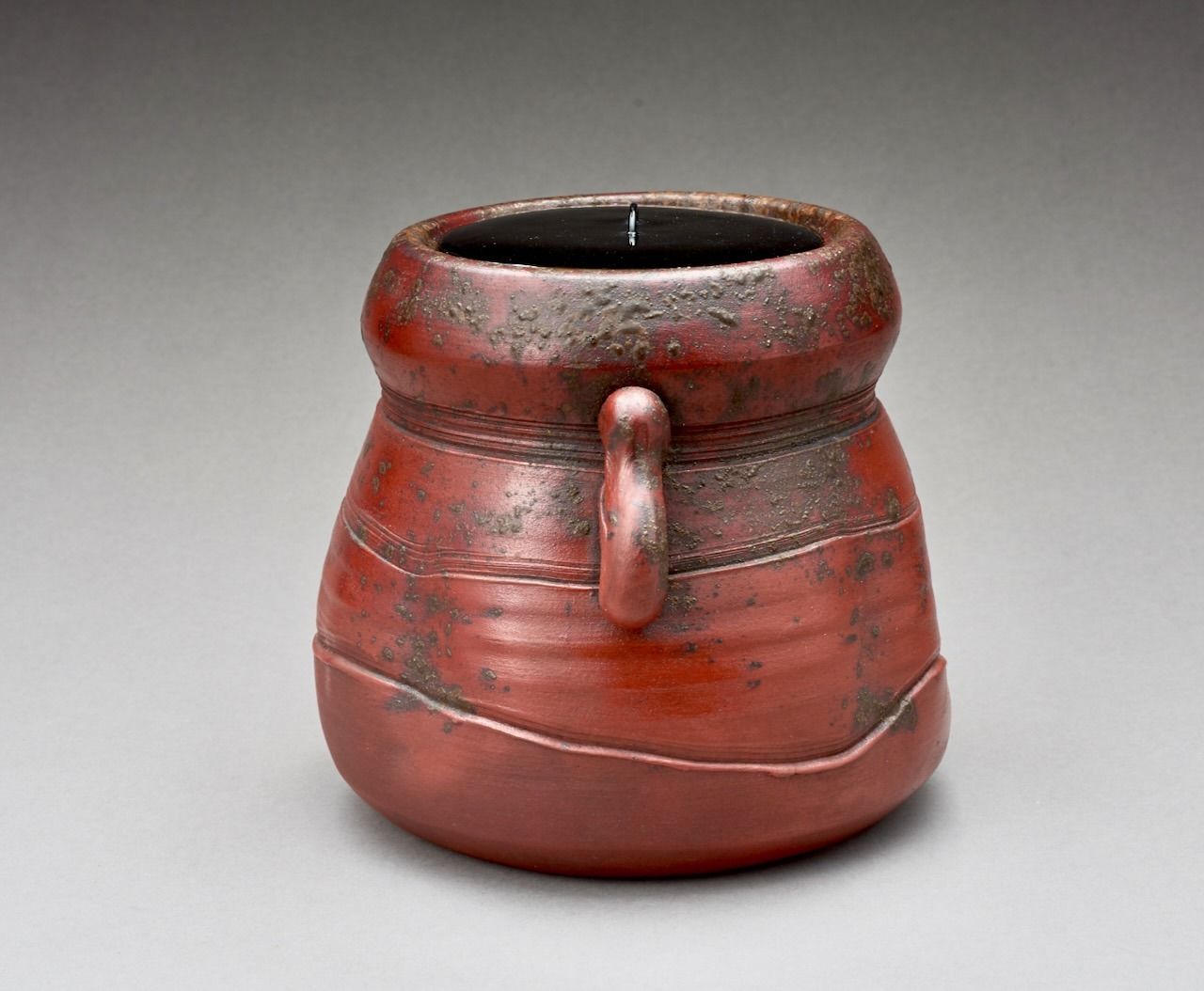
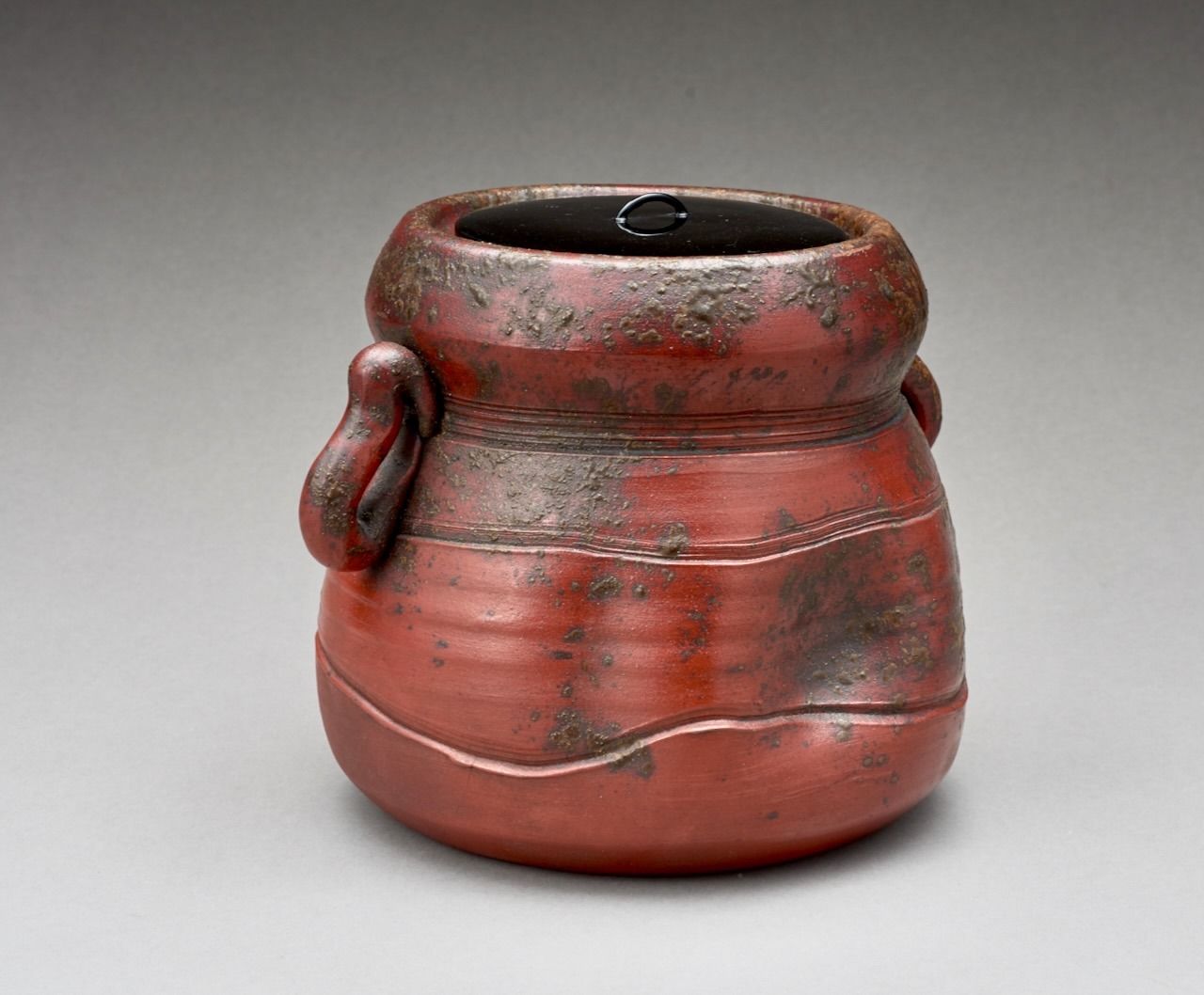
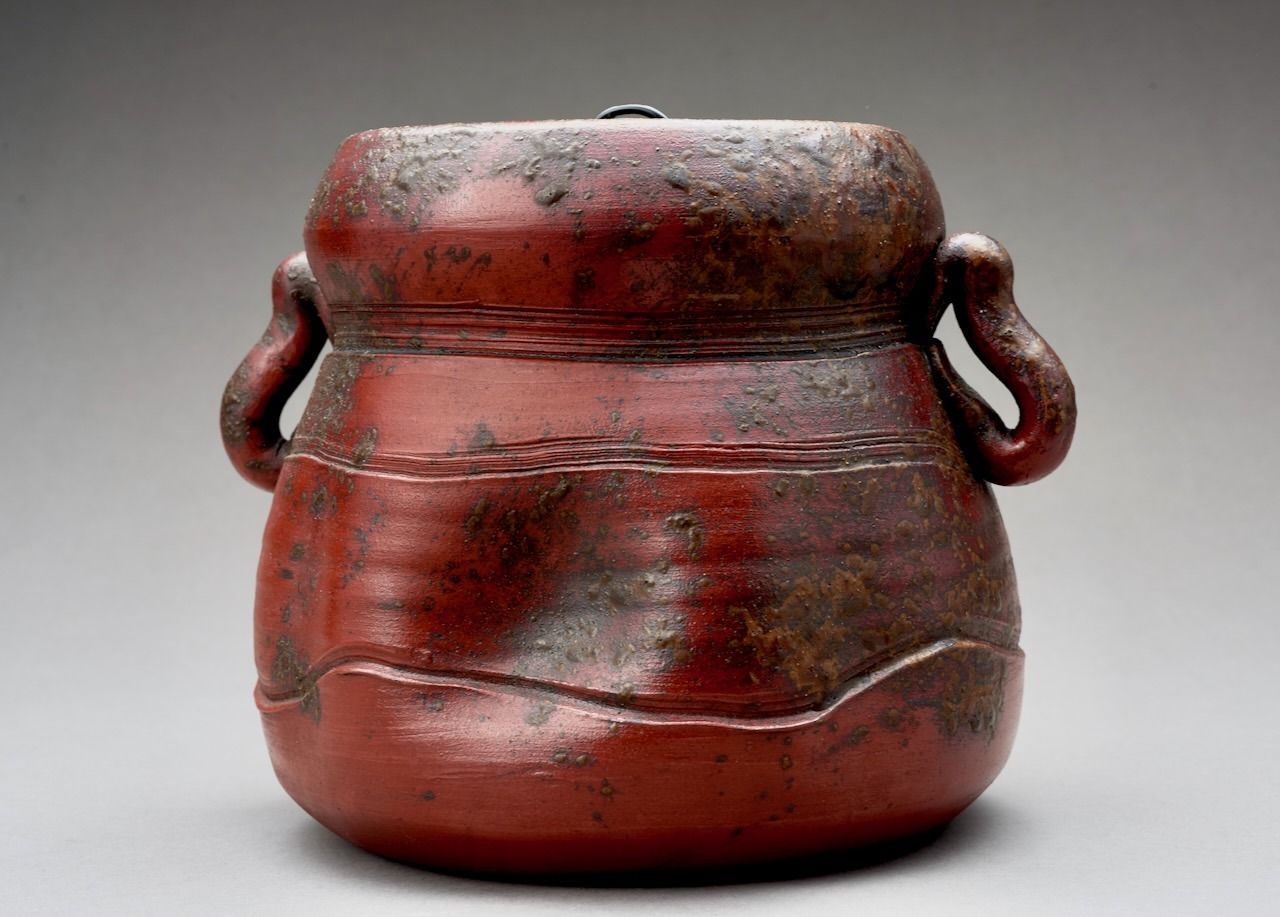
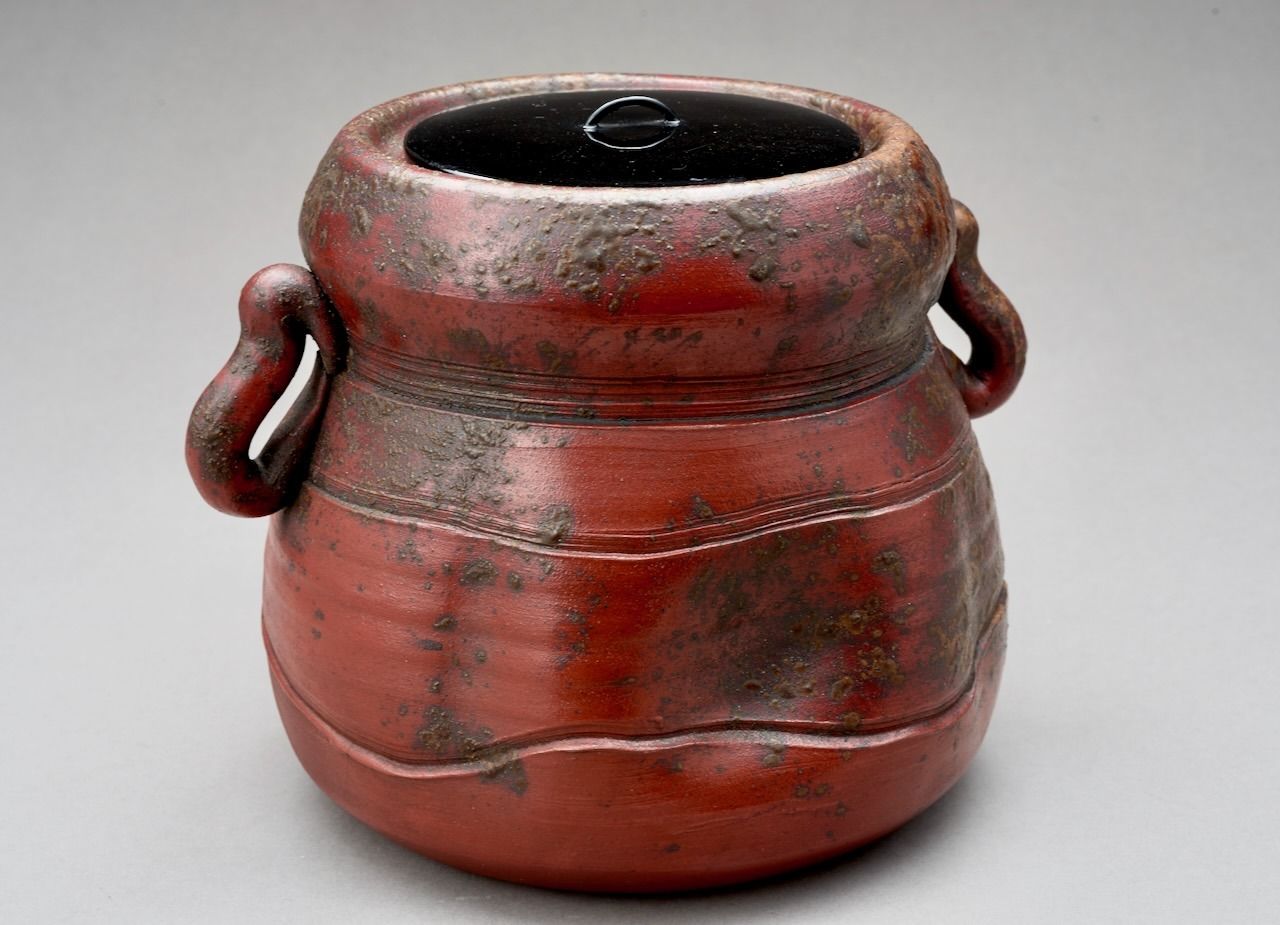
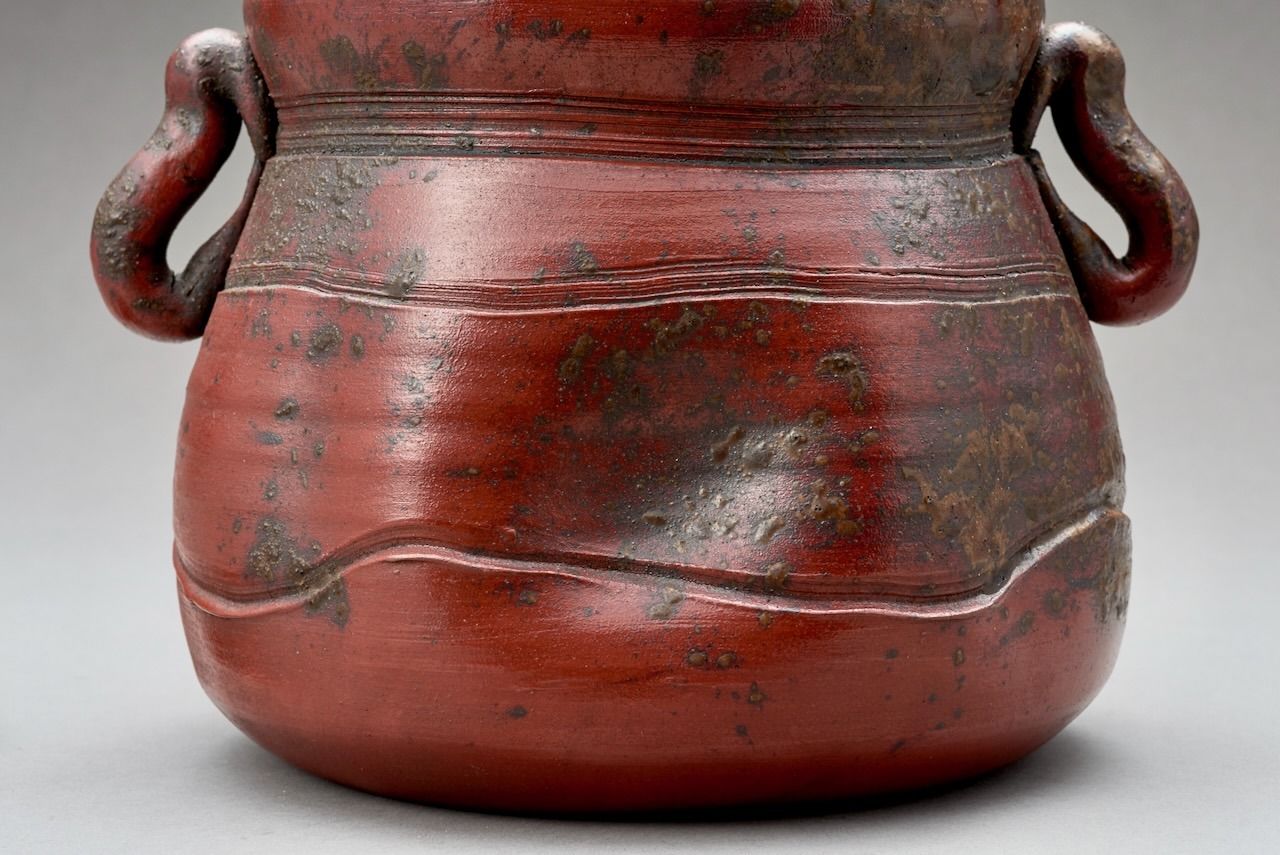
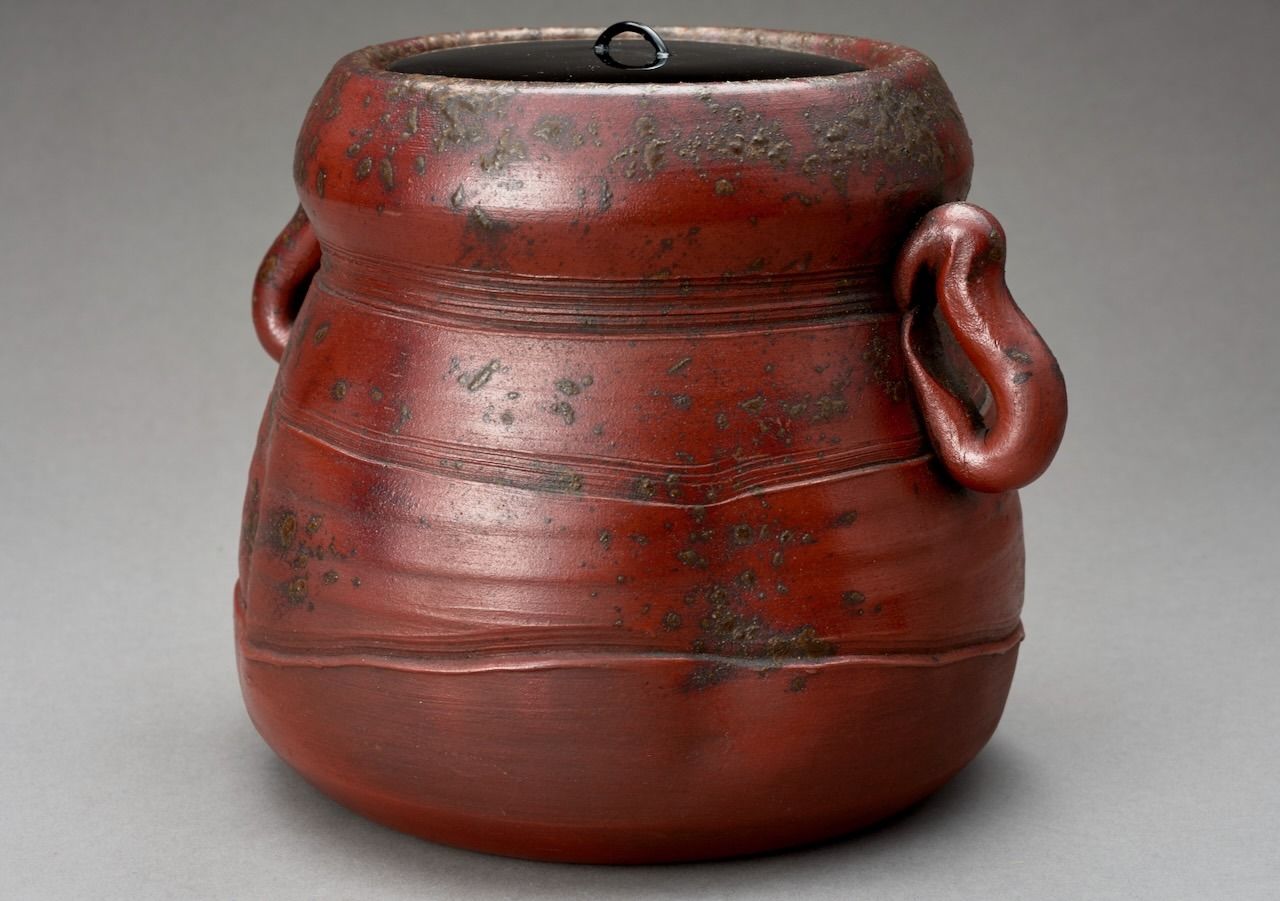
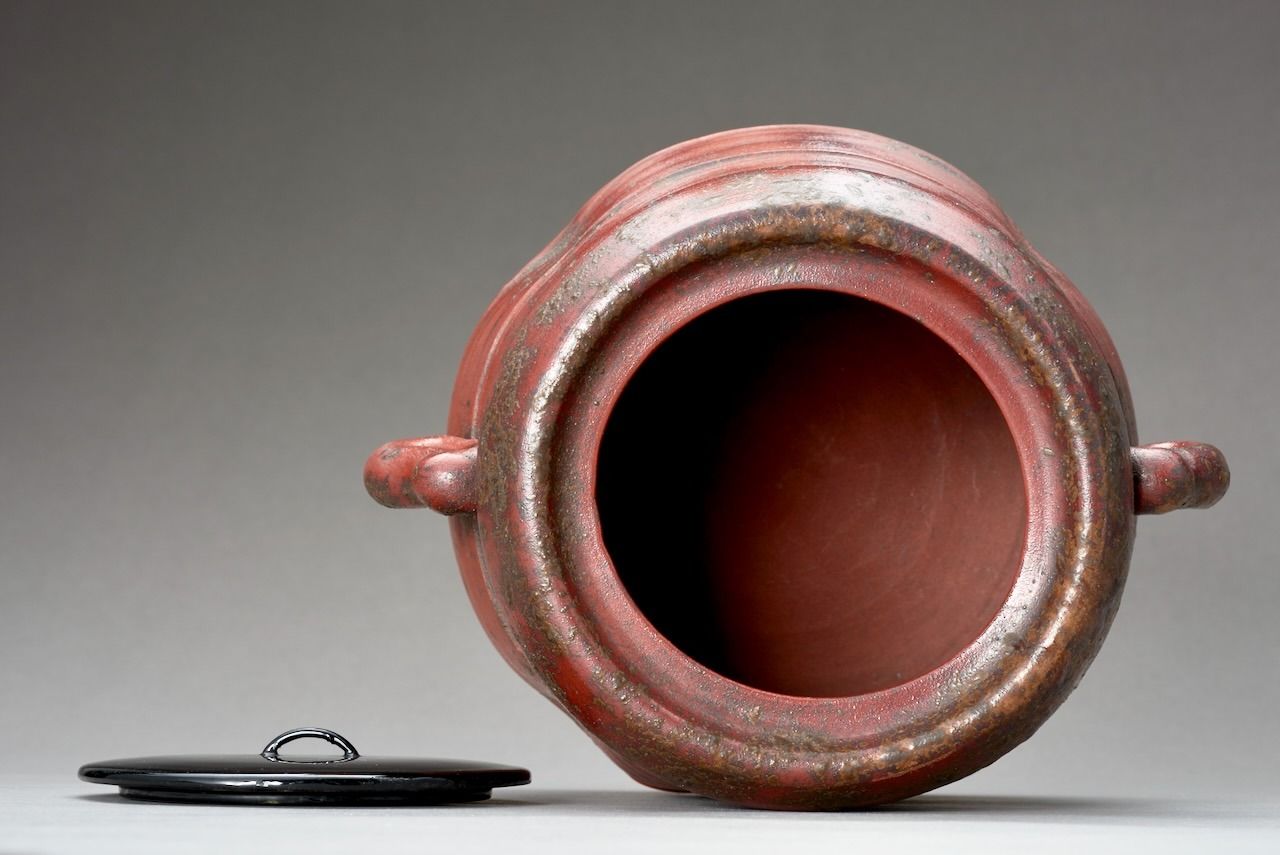
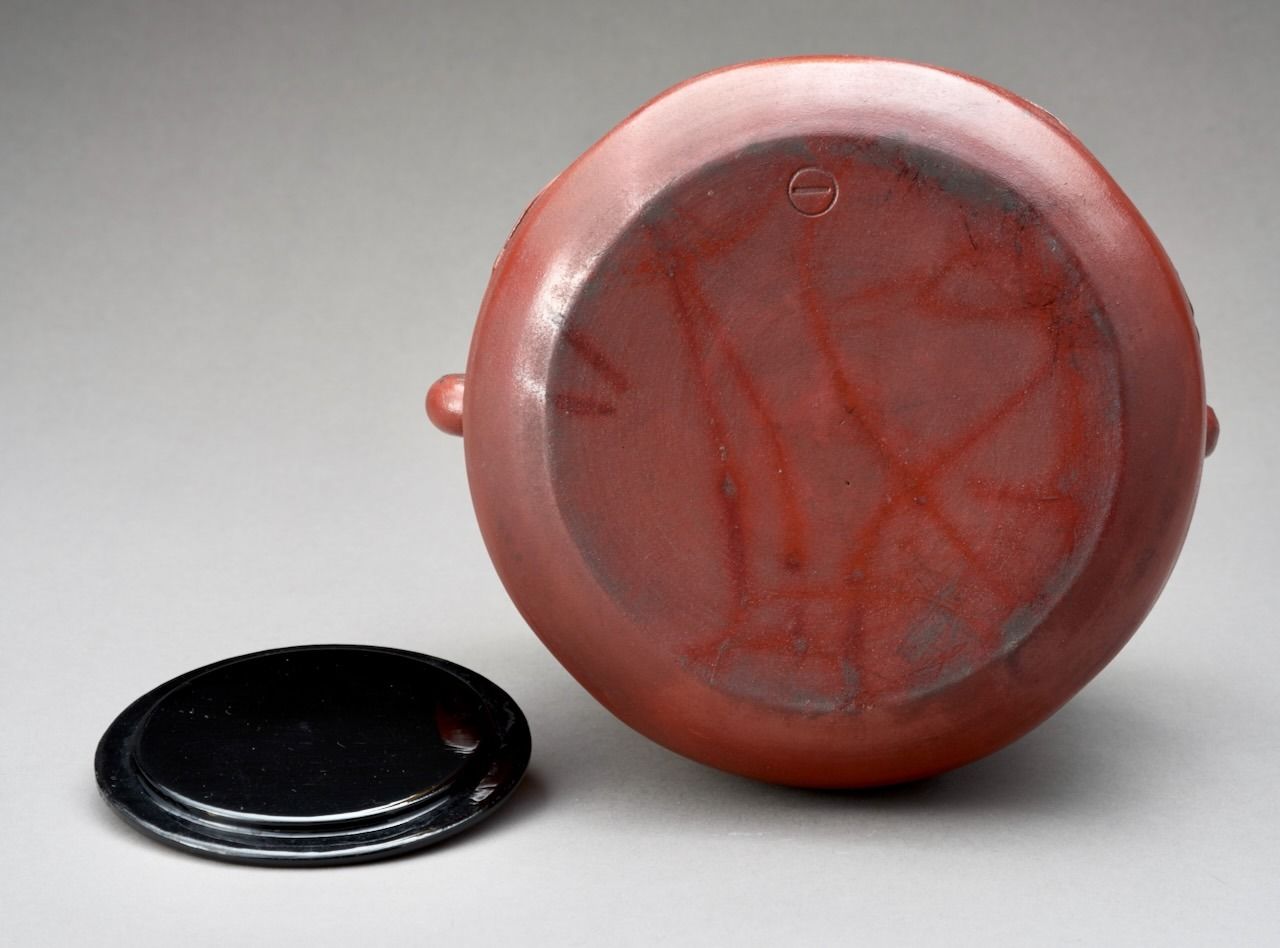
A full-bellied fresh-water jar for the tea room, thrown in Bizen stoneware and fired to a deep russet red. Incised rings band the neck and shoulder and a single wavering line circles the lower body, while across the shoulder the kiln has left a scatter of brown sesame-seed ash, or goma. Two curled loop handles stand out from the shoulder, and a fitted black lacquer lid readies it for use. Turned over, the base shows red hidasuki fire-cord markings and an impressed kiln mark.
Bizen, centred on the village of Imbe in present-day Okayama, is among Japan's oldest pottery traditions: unglazed stoneware fired slowly over many days in wood-burning kilns, until ash settles on the pots and melts into a natural glaze. Tea masters of the Momoyama period prized its earthy restraint, and through the Edo period, under the patronage of the Ikeda lords of Okayama, the Bizen kilns continued to supply jars, vases and other wares for tea. The mizusashi holds the fresh water used to fill the kettle and rinse the bowl, and sits beside the host throughout a gathering; Bizen was long favoured for it, and an old saying holds that water kept in a Bizen jar never spoils.
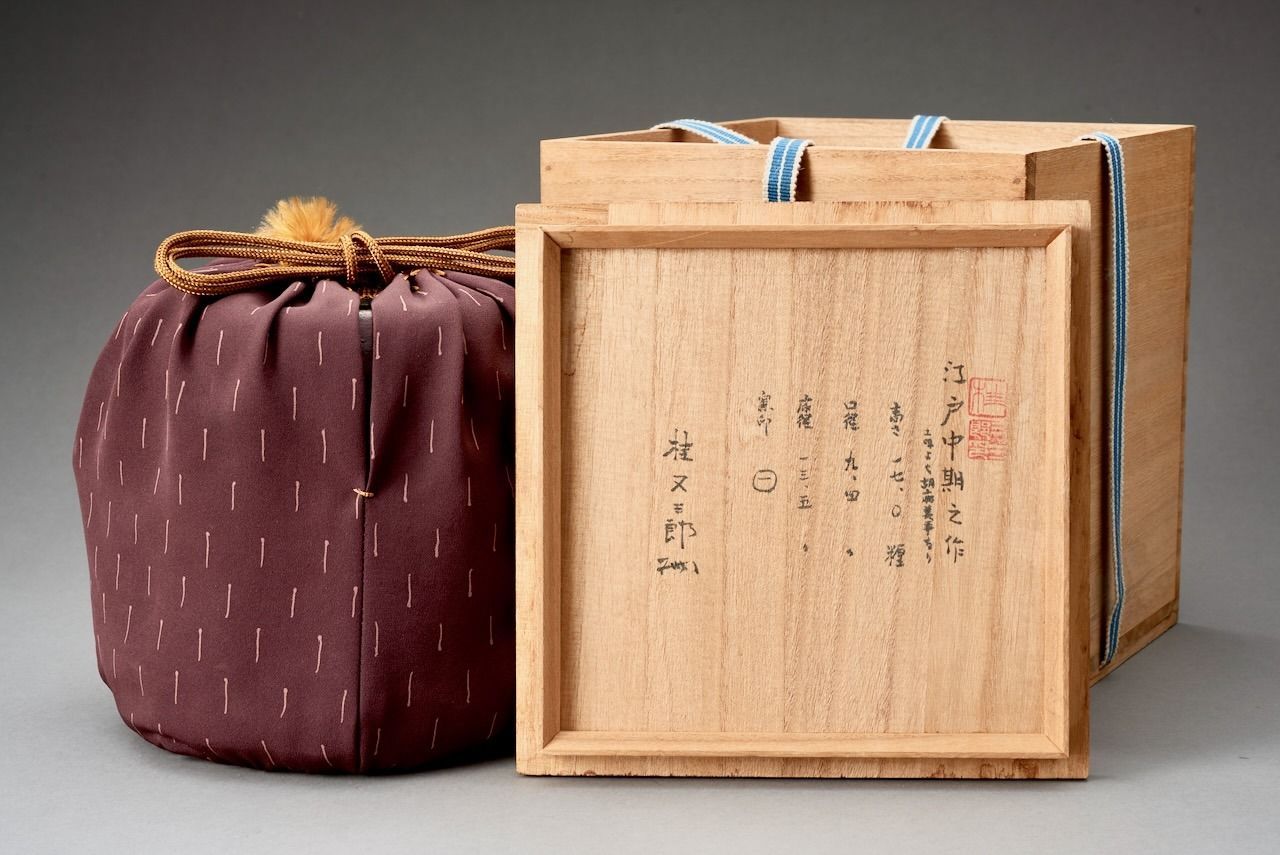
The box is inscribed by the Old Bizen scholar Katsura Matasaburō, under whom potters such as Harada Shūroku studied. He dates the jar 江戸中期之作, "a work of the mid-Edo period," and adds 土味よく胡麻美事なり, "fine clay, the sesame ash splendid," before recording its measurements and kiln mark and signing it. The jar stands 6.7 inches tall (17.0 cm), with a mouth of 3.7 inches (9.4 cm) and a base of 5.3 inches (13.5 cm). It comes with its lacquer lid, a silk shifuku and the inscribed wooden box.
*** International shipping and insurance are included in the price.
Supplementary resources